Introduction
Weddings are among the happiest occasions in human life. The gathering of family, the new clothes, the food, the laughter, the prayers for the couple, the sense that something important and hopeful is beginning — all of it stays in the memory for years. So when a wedding appears in a dream, it is no surprise that we wake up wondering what it meant. Was it a sign of good news? Was it about marriage, or about something else entirely? And does it matter whose wedding it was?
This article is about seeing a wedding in a dream in a general sense: attending someone else’s wedding, watching a wedding celebration, seeing a bride or a groom, being a guest, or finding yourself in the middle of wedding preparations. It is not about dreaming of your own wedding day, which is a different subject with its own meanings. Here we look at the wedding as something you witness — a celebration happening around you, with other people at its centre — and what that might mean for your life.
As with every dream, it helps to begin with a balanced view. In Islamic teaching, dreams come in different kinds. Some are glad tidings from Allah. Some come from our own thoughts, hopes, worries, and the events of our day. And some are unsettling dreams that are best ignored. A dream about a wedding can belong to any of these categories, and the feeling of the dream, the people in it, and what is happening in your waking life all matter when you try to understand it.
You will not find any guaranteed predictions in this article, because dreams do not work like that, and no honest interpreter would pretend otherwise. What you will find is a careful, thoughtful guide to the most common wedding dream scenarios, what classical Islamic dream literature says about them, and how to respond in a practical, faith-centred way. Read the scenario that matches your dream, think about the questions it raises, and then decide for yourself what, if anything, it is inviting you to notice about your life right now.
One more point before we begin: context matters more than any single symbol. A joyful wedding dream during a happy time in your life may mean something quite different from the same dream during a time of stress, grief, or waiting. A wedding you attended with people you love is different from a wedding full of strangers, or a wedding that felt tense and unhappy. Keep your own life in mind as you read, because the dream is speaking to you, not to a stranger.
Meaning in Brief
If you are short on time, here is the short version. In Islamic dream interpretation, a wedding is generally seen as a hopeful and positive symbol. It is associated with joy, new beginnings, union, family, blessings, and the coming together of people in a good cause. Seeing a wedding in a dream is often understood as a sign of happiness on the way, a new chapter opening in life, or a blessing that is gathering around you or someone close to you.
That said, the details change the meaning. A joyful, peaceful wedding with happy guests usually points toward good news, harmony in the family, or a positive change. Seeing a beautiful bride is often linked with blessing, honour, and good fortune. A wedding feast with plenty of food is often read as a sign of provision and generosity. A wedding held in a mosque is often seen as an especially blessed image, connected with a marriage or a union built on faith.
On the other hand, a wedding that feels tense, sad, or chaotic tends to carry a more careful message. A wedding without a bride or groom, a wedding that is cancelled, or a wedding where the guests are arguing may reflect worry, uncertainty, or a situation in your life that is not yet settled. These dreams are not necessarily bad omens. In many cases they are best understood as a picture of how you already feel — hopeful but uncertain, happy but anxious, or waiting for something that has not yet arrived.
The most important point is this: a single dream does not decide your future. Islamic teaching encourages us to take good dreams as a source of hope and gratitude, and to respond to troubling dreams by seeking refuge with Allah and moving on, rather than living in fear. Keep that balance in mind as you read the detailed scenarios below, and remember that the best response to any meaningful dream is usually a practical one — pray, reflect, and take one small step in a good direction.
- A joyful wedding celebration: often linked with happiness, good news, and new beginnings.
- Seeing a bride: often connected with blessing, honour, and good fortune.
- A wedding feast: often read as a sign of provision, generosity, and shared blessings.
- A wedding in a mosque: often seen as an especially blessed image, tied to faith and family.
- Being invited to a wedding: often linked with honour, belonging, and an opportunity on the way.
- A cancelled or troubled wedding: often a picture of worry, delay, or a matter that is not yet settled.
With that summary in place, let us look at each scenario in more detail.
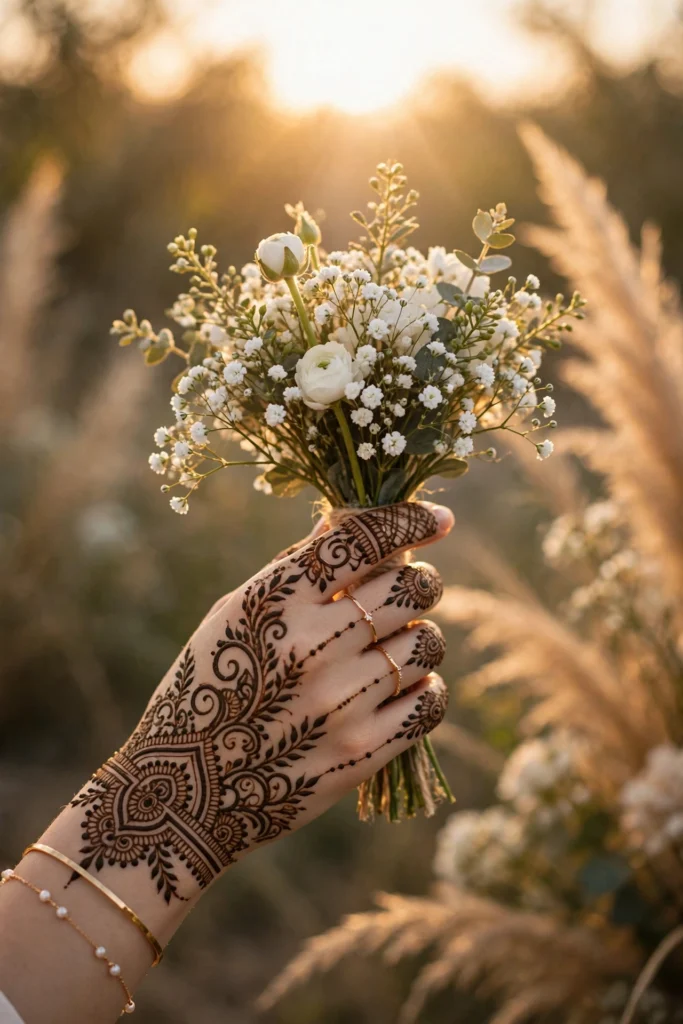
Attending a Wedding in a Dream
Attending a wedding as a guest is one of the most common wedding dreams. You are dressed up, you arrive at the venue, you greet family and friends, you sit among the guests, you watch the ceremony, and you share in the joy of the day. Sometimes you know the couple. Sometimes they are strangers. Sometimes the wedding is in a place you recognise, and sometimes it is somewhere you have never been.
In classical dream interpretation, attending a wedding is generally read as a positive sign. A wedding is a gathering for a good and blessed purpose, and being present at such a gathering in a dream is often understood as a sign that goodness and joy are coming into your life — or that you are already part of something good. It can point to a happy event in the family, a reconciliation, a new opportunity, or simply a period of relief after hardship.
The people at the wedding matter. If you attended the wedding of someone you know and love, the dream may reflect your real feelings for that person — your prayers for their happiness, your joy at their success, or your hope for their future. If the couple were strangers, the dream may be less about them and more about you: about your own hopes for happiness, belonging, and a new beginning. If you saw family members who have passed away at the wedding, that can carry a deep emotional weight, and many people find such dreams comforting, as if their loved ones were present at a moment of joy.
Notice how you felt at the wedding. Were you happy, relaxed, and welcomed? That feeling often reflects contentment and peace in your waking life, or a hope that such peace is near. Were you uncomfortable, ignored, or out of place? That may reflect a feeling of not belonging, or a worry about your place in your family or community. Were you busy helping — serving food, looking after children, arranging things? That may reflect your caring nature and the role you play in bringing people together.
If you dream of attending a wedding and wake up feeling joyful, take that joy seriously. Thank Allah for it. You do not need to search for a hidden code in the dream. Sometimes the message is simple: happiness is a blessing, community matters, and good days are worth celebrating — and worth praying for.
Seeing a Bride in a Dream
Seeing a bride in a dream is an image that stays with you. The bride may be in a beautiful dress, with henna on her hands, surrounded by family, smiling as she enters the hall. Or she may be quiet and shy, sitting among the women, waiting for the ceremony to begin. In many cultures, the bride is the centre of the wedding, and in dreams she often carries a special symbolic weight.
In Islamic dream literature, a bride is often associated with blessing, honour, beauty, and good fortune. A beautiful, happy bride is generally read as a sign of goodness coming into your life — a blessing, a success, or a happy change. For a family with a daughter of marriageable age, dreaming of a bride may reflect hopes and prayers for her future. For someone waiting for good news — a job, a marriage proposal, a visa, the resolution of a difficulty — a bride in a dream can feel like a sign that the wait may soon be over.
The condition of the bride matters too. A bride who is happy, well dressed, and surrounded by loving family usually points toward a joyful outcome. A bride who looks sad, worried, or alone may reflect concern — either for the person in the dream, or for a situation in your own life that feels uncertain. A bride whose dress is torn, dirty, or unfinished may suggest that something is not yet ready, or that a matter needs care and attention before it can be completed.
It is worth asking who the bride was. If she was someone you know, think about what is happening in her life right now. Are you praying for her? Are you worried about her? Is there good news you are hoping to hear about her? If she was a stranger, the dream may be more about your own hopes than about any one person. And if the bride was a close family member, the dream may reflect your love for her and your wish to see her happy and settled.
Whatever the details, a bride in a dream is usually a hopeful image. Let it remind you to pray for the happiness of others, and to keep hope alive for the good things you are waiting for in your own life.
Seeing a Groom in a Dream
Seeing a groom in a dream carries its own meanings. The groom may be dressed in a fine sherwani or suit, smiling as he arrives, greeted by family and friends. He may be nervous, excited, or calm and dignified. He may be someone you know well, or a complete stranger whose face you cannot quite remember when you wake up.
In dream interpretation, a groom is often linked with responsibility, honour, and a new stage of life. Marriage brings new duties — providing for a family, caring for a spouse, building a home — and the groom in a dream can symbolise readiness for those duties. For a young man, dreaming of a groom may reflect his own thoughts about marriage and the future. For parents, it may reflect hopes for a son or a brother. For anyone, it can point to a new responsibility or a new role that is coming, whether in family life, work, or community.
A happy, confident groom usually points toward a positive outcome: a marriage that will bring happiness, a responsibility that will be carried well, or a new beginning that is built on solid ground. A groom who looks worried, unprepared, or unhappy may reflect anxiety about a commitment — a marriage, a job, a promise, or a decision that feels heavy. That anxiety may belong to the groom in the dream, or it may belong to you, the dreamer, if you are facing a commitment of your own.
If the groom was someone you know, consider what you know about his life. Is he about to marry? Is he facing a big decision? Are you praying for him? If he was a stranger, the dream may be speaking more generally about manhood, responsibility, and the hope of a stable, honourable future. Either way, the groom in a dream is usually a dignified figure, and the dream is often an invitation to pray for the people who carry responsibility in your life — and to prepare well for the responsibilities that are coming to you.
A Wedding in a Mosque
A wedding held in a mosque is a particularly meaningful image for many Muslims. The nikah in the mosque, with the imam, the witnesses, the short sermon, and the du’a for the couple, is a simple and blessed occasion. To dream of such a wedding — the couple seated in the prayer hall, family gathered quietly, the words of the nikah being spoken — often feels sacred in a way that a grand hall or a hotel wedding does not.
In dream interpretation, a wedding in a mosque is generally seen as an especially blessed sign. The mosque is a house of Allah, a place of prayer and peace, and a marriage begun there is understood as a marriage built on faith. Dreaming of a wedding in a mosque is often linked with a righteous marriage, a union blessed by Allah, family harmony, and a new beginning that starts with prayer rather than display.
This dream can mean different things depending on your situation. For a family preparing for a marriage, it may reflect their wish for a simple, blessed nikah. For someone praying for a good spouse — for themselves, a child, or a sibling — it may reflect that prayer and the hope behind it. For someone already married, it may be a reminder to bring faith back to the centre of the marriage: to pray together, to treat one another with kindness, and to build the home on trust and respect.
Notice the atmosphere of the mosque wedding in your dream. Was it quiet and peaceful, with a small gathering and sincere prayers? That often points to blessing in simplicity. Was it crowded and joyful, with the whole community present? That often points to shared happiness and the support of family and friends. Was the imam speaking, or was the Quran being recited? Those details can reflect a longing for guidance and knowledge in family life.
If you dream of a wedding in a mosque, take it as encouragement. Pray for the couple, whoever they were. Pray for your own family. And if a marriage is being planned in your family, consider the beauty of simplicity — a nikah that begins with prayer is a nikah that begins in the best possible way.
A Wedding Feast and Wedding Food
Food is at the heart of every wedding celebration. The tables laden with dishes, the smell of biryani and kebabs, the sweets passed from hand to hand, the guests eating together and praising the cooking — these are the details that make a wedding feel real, in waking life and in dreams. Dreaming of a wedding feast is a common experience, and it carries meanings of its own.
In Islamic dream interpretation, food in general is often linked with provision, sustenance, and the blessings of Allah. A wedding feast, with its abundance and generosity, is usually read as a sign of provision and plenty. If you dreamed of eating well at a wedding, surrounded by happy people, that is often understood as a sign that your needs will be met, that a period of difficulty may be easing, or that generosity and sharing will bring blessing into your life.
The details of the feast can add meaning. A feast with plenty of food for everyone, where no one goes hungry and the hosts are generous, usually points toward abundance and good character. A feast where the food runs out, or where guests are turned away hungry, may reflect worry about provision, or a feeling that resources are stretched thin. Eating with family and loved ones at a wedding often points to harmony and togetherness. Eating alone at a wedding, while others celebrate around you, may reflect a feeling of being left out or overlooked.
It is also worth thinking about your role at the feast. Were you a guest, enjoying the hospitality of others? That may reflect gratitude for the blessings in your life, and the kindness of the people around you. Were you serving the food, or helping to cook? That may reflect your generous nature and the joy you find in serving others. Were you the host, worried about whether there was enough? That may reflect the weight of responsibility you carry for your family, and the care you take to provide for them.
A wedding feast dream is, in most cases, a warm and hopeful dream. Let it remind you to be grateful for the provision Allah has given you, to share what you have with others, and to enjoy the simple blessing of eating together with the people you love. Generosity at a wedding is a picture of generosity in life — and generosity, in Islam, is a door to blessing.
Dancing and Music at a Wedding
Dancing and music at a wedding can be a joyful sight in a dream, or a complicated one. In many cultures, weddings are celebrated with music, dancing, and loud festivities that go on late into the night. In a dream, you might see guests dancing, musicians playing, or a celebration that feels wild and uncontrolled. How should such a dream be understood?
In classical Islamic dream literature, music and dancing in dreams are treated with care. Interpreters have often noted that the meaning depends on the nature of the celebration and the feeling of the dream. A modest, joyful celebration — family singing, children laughing, a happy atmosphere without excess — is usually read differently from a loud, chaotic party where people have lost all restraint. The first may reflect happiness and blessing. The second may reflect heedlessness, wastefulness, or a gathering that has drifted away from what is good.
If you dreamed of music and dancing at a wedding and woke up feeling uncomfortable, that discomfort is worth listening to. It may reflect a real concern you carry: that a celebration in your family has become too focused on display and expense, or that something good is being spoiled by excess. It may also reflect a personal struggle — a wish to celebrate and enjoy life, balanced against a wish to live modestly and within the teachings of Islam. That tension is honest and common, and the dream may simply be showing it to you.
On the other hand, if the celebration in your dream felt joyful, warm, and free of anything troubling, there is no need to worry. Joy itself is not a problem in Islam. A wedding is a time of happiness, and the Prophet’s teaching encourages expressing that happiness in good and wholesome ways — with food, with family, with kind words, and with du’a for the couple. A dream of a happy wedding celebration can simply reflect the natural human joy of seeing two people begin a new life together.
The best response to this kind of dream is reflection, not guilt. Ask yourself what the celebration felt like, and what it says about your own values. If it points to something you would like to change — a simpler wedding, a more modest celebration, a gathering that puts prayer and family first — then let the dream encourage you in that direction. And if it was simply a joyful dream, enjoy the memory of it, and pray for the happiness of the couple.
A Wedding Without the Bride or Groom
One of the strangest wedding dreams is the wedding where someone essential is missing. The guests are all there, the hall is decorated, the food is ready — but the bride has not arrived, or the groom is nowhere to be found. People are looking around, asking questions, and the celebration cannot begin. You wake up feeling confused, and a little anxious.
In dream interpretation, a wedding without the bride or groom is often read as a sign of something incomplete or delayed. A wedding needs both the bride and the groom; without one of them, it cannot happen. In the same way, a matter in your life may be waiting for something — or someone — before it can move forward. It could be a marriage proposal that has not yet been answered, a decision that is waiting on another person’s response, a project that needs a key piece before it is complete, or a family matter that is on hold.
Notice who was missing, and how people reacted. If the bride was missing, the dream may reflect concern about the bride herself, or about the feminine side of the matter — the home, the family, the emotional heart of the situation. If the groom was missing, it may reflect concern about responsibility, provision, or the person who is expected to take a leading role. If people in the dream were calm and patient, waiting without panic, that may suggest that the delay is temporary and the matter will resolve in time. If people were angry or in chaos, that may reflect real tension around the delay.
It is important not to treat this dream as a prediction that a real wedding will fail. Dreams do not work like that. The missing bride or groom is more likely a symbol of a feeling you already carry: that something important is not yet in place, and you are waiting. The practical response is patience and prayer. Make du’a for the matter that is delayed. Take the steps you can take, and trust Allah with the steps you cannot. And if the delay involves another person, speak to them kindly and honestly, rather than letting worry grow in silence.
Being Invited to a Wedding
Receiving a wedding invitation in a dream — a beautiful card, a phone call from a relative, a personal invitation from a friend — is a small detail that can carry a warm meaning. An invitation says: you matter to us, we want you there, you belong at this celebration. To dream of being invited is often read as a sign of honour, belonging, and inclusion.
In classical interpretation, an invitation to a wedding is generally seen as a positive sign. It can point to an opportunity coming your way — a job, a proposal, a partnership, a chance to take part in something good. It can also point to recognition: someone values you, trusts you, and wants you to be part of their happiness. For someone who has been feeling overlooked or left out, such a dream can feel like a reassurance that they are remembered and valued.
How you received the invitation matters. If it came with warmth and love, from someone you respect, that often reflects a genuine bond. If it came late, or as an afterthought, or you felt unsure whether you were really welcome, that may reflect a worry about your standing with someone, or a feeling that you are on the edge of a group rather than at its centre. If you were invited but could not decide whether to go, that may reflect a real decision you are facing — whether to accept an opportunity, attend an event, or take part in something new.
If you dream of being invited to a wedding, take it as encouragement to stay connected with the people around you. Accept invitations when you can. Show up for the happiness of others. And remember that in Islam, attending a wedding when invited is itself a valued act — a way of honouring the couple, strengthening family ties, and sharing in the joy of the community. The dream may simply be reminding you of the blessing of belonging.
Missing a Wedding in a Dream
Missing a wedding in a dream is a frustrating experience. You are running late, you cannot find the venue, your clothes are not ready, the car will not start, or you arrive just as the ceremony is ending and everyone is leaving. You wake up with a sense of loss, as if you missed something important — and you did, at least in the dream.
In dream interpretation, missing a wedding is often read as a sign of a missed opportunity, or a fear of missing one. It may reflect a real situation in your life: an opportunity you did not take, a decision you delayed, a chance that passed while you were busy with other things. It can also reflect anxiety about the future — a worry that time is passing, that others are moving ahead, or that you will be too late for something that matters to you.
It is worth asking yourself what you were missing, and why. Were you late because you were unprepared? That may point to a need to prepare better for something in your life — a marriage, a job, an exam, a responsibility. Were you lost and could not find the way? That may reflect confusion or a lack of direction. Were you held back by someone or something? That may reflect a real obstacle that needs attention. The reason for missing the wedding in the dream often points to the real issue in waking life.
But a dream of missing a wedding does not mean the opportunity is gone forever. In life, unlike in a dream, most opportunities can be recovered, rescheduled, or replaced by something better. If the dream has shown you a fear of missing out, let it motivate you to act: prepare for the thing you care about, make the call you have been putting off, take the step you have been delaying. And if you truly missed something, accept it with patience, make du’a, and trust that Allah’s plan for you is better than the plan you had for yourself.
A Wedding Getting Cancelled
A wedding that is cancelled in a dream — the announcement, the disappointed guests, the decorations coming down, the couple parting ways — is a sad and unsettling image. It is natural to wake up worried, especially if the wedding was for someone you know. Does it mean the real wedding will be cancelled? Almost certainly not. But the dream is worth understanding.
In dream literature, a cancelled wedding is often read as a sign of delay, disagreement, or a matter that is not yet settled. It may reflect a real tension: a family disagreement about a marriage, a proposal that is uncertain, a relationship going through a difficult time, or a plan that has hit an obstacle. It can also reflect your own fear — the fear that something you have been hoping for will not happen, or that a happy plan will fall apart.
Notice how the cancellation happened in the dream. Was it a calm, mutual decision, with people accepting it gracefully? That may suggest that a delay is for the best, and that patience will bring a better outcome. Was it sudden and painful, with arguments and tears? That may reflect real conflict that needs attention and honest conversation. Was it cancelled for a practical reason — money, distance, illness? That may point to a practical obstacle that can be addressed with planning and prayer.
The best response to this kind of dream is not to spread worry or to tell the couple about it. That would only cause distress, and the dream is not a prediction. Instead, pray for the people involved. If you know of a real difficulty around a marriage, consider whether there is a kind and helpful way to support the family — a word of encouragement, a practical offer of help, or simply keeping the matter in your du’as. And if the dream reflects your own hopes and fears, be honest with yourself about them, and trust that Allah knows what is best, even when a plan changes.
Wearing Wedding Clothes in a Dream
Wearing wedding clothes in a dream — a bride’s dress, a groom’s sherwani, a fine suit, henna on the hands, jewellery, a garland of flowers — is a vivid and memorable image, even when you are not the bride or groom. You might be a guest dressed in your finest clothes, a bridesmaid or groomsman in matching outfits, or simply someone who finds themselves wearing wedding clothes without knowing why.
In dream interpretation, wedding clothes are often linked with honour, dignity, and celebration. To dream of wearing fine, clean, beautiful clothes at a wedding is generally read as a sign of respect, happiness, and a good reputation. It can point to a happy occasion on the way, a time when you will be honoured, or a period of life when you feel proud and confident. New clothes in dreams are often associated with new beginnings, and wedding clothes carry that meaning with extra warmth.
The condition of the clothes matters. Clean, beautiful, well-fitting clothes usually point toward a positive outcome. Torn, dirty, ill-fitting, or uncomfortable clothes may reflect worry about how you are seen by others, or a feeling that you are not ready for something. If the clothes were too tight or too heavy, that may reflect the weight of expectation. If they were light and comfortable, that may reflect ease and confidence.
It is also worth noticing whether you were wearing the clothes as a guest or as the bride or groom. As a guest, the dream is usually about celebration and belonging. If you found yourself dressed as the bride or groom when you did not expect to be, the dream may be touching on your own hopes about marriage, or about a new role you are stepping into. Either way, the image of wedding clothes is generally a hopeful one — a reminder that life has moments of beauty and honour, and that dressing well for a happy occasion is itself a small act of gratitude.
Other Common Wedding Dreams
Not every wedding dream fits neatly into the categories above. Here are a few more scenarios that people often report, with a brief reflection on each one.
The wedding of someone you know: Dreaming of the wedding of a friend, a cousin, a sibling, or a colleague often reflects your real feelings for that person. If you are happy for them in the dream, it may reflect genuine love and prayers for their happiness. If you feel jealous, worried, or left out, the dream may be showing you feelings you have not fully admitted to yourself. Either way, it is an invitation to be honest with yourself and to pray sincerely for the people you care about.
A stranger’s wedding: A wedding full of people you do not know can feel strange, but it is a common dream. It often points less to any one person and more to your own hopes: for happiness, for community, for a new beginning. It can also reflect a sense of being an outsider — watching other people’s joy from a distance — and a longing to be part of something happy yourself.
A wedding in your own home: If the wedding took place in your house, with guests filling your rooms and the celebration happening under your roof, that often points to blessing and happiness coming into your family. The home is a symbol of family life, and a wedding in the home can suggest that joy and unity are entering the household. It can also reflect the responsibility of hosting — the care and effort that go into bringing people together.
Wedding preparations: Dreaming of preparing for a wedding — decorating the hall, arranging flowers, choosing clothes, cooking food, sending invitations — is often linked with anticipation and effort. It can reflect a real event you are preparing for, or a period of life where you are working hard toward something good. The preparations themselves are a hopeful sign: they show that something is being built, step by step, with care and intention.
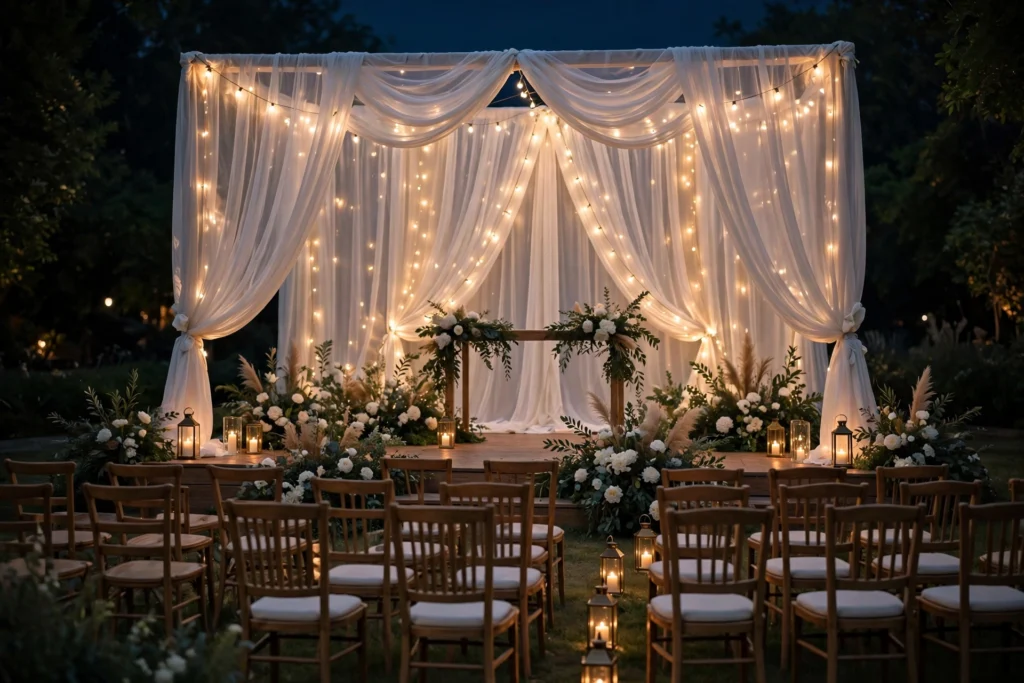
A wedding at night: A wedding held at night, under lights and stars, often carries a romantic and hopeful feeling. Night weddings in dreams can point to happiness that comes after a difficult time, like light after darkness. They can also reflect the private, intimate side of marriage — the quiet commitment that matters more than the public celebration.
Children at a wedding: Seeing children playing, laughing, and running around at a wedding in a dream is usually a joyful image, linked with innocence, family blessing, and the hope of the next generation. It can reflect prayers for children, hopes for a growing family, or simply the happiness of seeing the young and the old celebrate together.
What Classical Islamic Dream Literature Says
Islam has a long and rich tradition of dream interpretation, going back to the earliest generations of Muslims. The most famous name associated with this tradition is Muhammad ibn Sirin, a respected scholar of the early Islamic period, who is widely known for his work on dreams. Many books of dream interpretation have been attributed to him over the centuries, and his name is still mentioned whenever Muslims talk about the meaning of dreams.
It is important to be honest about this tradition. The books that circulate today under the name of Ibn Sirin are collections that grew over many centuries, with additions and changes made by later writers. Scholars note that we cannot be certain that every interpretation in these books goes back to Ibn Sirin himself. So when we speak of the tradition attributed to Ibn Sirin and the classical dream literature, we are speaking of a broad, respected body of interpretation that has been passed down and discussed by scholars — not a single book with a guaranteed chain of transmission for every entry.
Within that tradition, a wedding is generally understood as a symbol of joy, union, and new beginnings. Classical interpreters often linked weddings with happiness and blessing, and with the joining together of people, families, and fortunes. Attending a wedding was usually read as a sign of good news or a happy event. A wedding feast was often linked with provision. A bride was often associated with honour and blessing. These readings make sense when you think about what a wedding is in real life: a gathering for a good purpose, a celebration of a new family, and a moment when a community comes together in joy.
At the same time, the classical tradition also teaches humility about dreams. The scholars who wrote about dream interpretation were careful to say that interpretations are not certainties. A dream can have more than one possible meaning. The same symbol can mean different things for different people, depending on their situation, their character, and their life. A good dream can be a source of hope, but it is not a promise. A troubling dream can be a warning, but it is not a fixed fate. The dreamer, the context, and the feeling of the dream all matter — and even then, Allah alone knows the true meaning of what we see in sleep.
This is why the classical literature should be read as guidance for reflection, not as a codebook with one fixed answer for every dream. Use it to think more deeply about your dream, to ask better questions about your life, and to turn toward what is good. Do not use it to predict the future, to frighten yourself or others, or to make major life decisions based on a single night’s dream. If a dream raises a serious question about your life, discuss it with a knowledgeable person you trust, and make your decisions based on clear thinking, good advice, and prayer — not on the dream alone.
What to Do After Such a Dream
After reading through all of these scenarios, you may be wondering what to actually do with your dream. Here is a simple, practical guide that follows the balanced approach taught in Islam.
If the dream was good and you woke up feeling happy: Thank Allah for it. A good dream is a blessing, and gratitude is the right response. You may wish to share it with someone you trust and love, as the tradition encourages sharing good dreams with those who care for you. Then let the dream encourage you: keep praying, keep doing good, and keep moving in the direction the dream pointed toward. Do not over-analyse it or try to extract a detailed prediction from it. Sometimes the best interpretation is simply to be grateful and to carry on.
If the dream was troubling and you woke up feeling worried: Seek refuge with Allah from the evil of what you saw. The traditional advice is to say the words of seeking refuge, to spit lightly to your left three times, and to turn over and try to sleep again, without dwelling on the dream. Do not share frightening dreams widely, and do not let them control your day. Pray, give a little in charity if you can, and focus on something good. A troubling dream does not have to ruin your day, and it does not decide your future.
In either case, take one practical step: The most useful response to a meaningful dream is usually a small, real action. Pray for the couple you saw in the dream, whoever they were. If a marriage is being planned in your family, take a practical step toward it — make a phone call, discuss the matter honestly, or help with a preparation. If the dream was about your own hopes for marriage, consider what you can do today: improve yourself, pray sincerely, speak to your family, or learn more about what makes a good marriage. These small steps are worth far more than hours of wondering about the dream, because they turn reflection into real change.
Keep a dream journal if it helps: If you have vivid dreams often, consider keeping a simple notebook by your bed. When you wake from a meaningful dream, write down the main details, how you felt, and what was happening in your life at the time. Over weeks and months, you may start to see patterns — dreams that come when you are stressed, or hopeful, or facing a decision — and those patterns can teach you more about yourself than any single dream can.
Talk to someone knowledgeable if you are unsure: If a dream keeps returning, or if it raises a serious question about your faith or your life, speak to an imam or a scholar you respect. Describe the dream simply and honestly, without adding details you do not remember, and listen to their advice. A good advisor will not
and practical.
Frequently Asked Questions
Is seeing a wedding in a dream a good sign in Islam? In general, yes. A wedding is usually seen as a positive symbol in Islamic dream interpretation, linked with joy, new beginnings, family, and blessings. A joyful, peaceful wedding is most often understood as a hopeful sign. However, the details matter: a troubled, chaotic, or cancelled wedding can carry a more careful message, usually understood as a picture of worry, delay, or a matter that is not yet settled.
What does it mean to dream of attending someone else’s wedding? Attending someone else’s wedding in a dream is generally read as a positive sign, connected with shared happiness, good news, and belonging. It may reflect your prayers for the couple, your joy at their happiness, or a happy event coming into your own life. How you felt at the wedding — welcomed and joyful, or uncomfortable and out of place — often says more than the details of the ceremony.
What does seeing a bride in a dream mean? A bride in a dream is often associated with blessing, honour, beauty, and good fortune. A happy, beautiful bride is generally read as a sign of goodness coming into your life. A sad or worried bride may reflect concern for the person in the dream, or uncertainty about a situation in your own life. The identity of the bride and the feeling of the dream both matter when reflecting on its meaning.
What does a wedding feast mean in a dream? A wedding feast is often linked with provision, generosity, and shared blessings. Eating well at a joyful wedding is generally understood as a hopeful sign that your needs will be met and that generosity brings blessing. A feast where the food runs out, or where guests go hungry, may reflect worry about provision or resources being stretched thin.
Does dreaming of a wedding mean I will get married soon? Not necessarily. A wedding dream can reflect hopes and prayers about marriage, but it is not a promise or a timetable. It may be about someone else’s marriage, about a new beginning in a different part of your life, or simply about joy and community. Treat it as encouragement to pray sincerely and to prepare well, not as a guarantee about when or how a marriage will happen.
What does a cancelled wedding in a dream mean? A cancelled wedding is often read as a sign of delay, disagreement, or a matter that is not yet settled. It may reflect a real tension around a marriage or a plan, or a fear that something you hoped for will not happen. It is not a prediction that a real wedding will fail. The best response is prayer, patience, and, where needed, honest and kind conversation with the people involved.
Should I tell others about my wedding dream? If the dream was good and left you feeling happy and hopeful, it is fine to share it with someone you trust and love. If the dream was troubling, the traditional advice is not to share it widely, and not to let it worry you. In either case, avoid making big decisions based on a single dream, and focus instead on prayer, reflection, and practical good deeds.
What should I do if I keep dreaming about weddings again and again? Repeated dreams about weddings often reflect something that is on your mind in waking life — hopes about marriage, questions about family, a longing for happiness and belonging, or a period of change. Pay attention to what is happening in your life when these dreams come. Consider speaking to a knowledgeable person you trust, and take one practical step: pray sincerely, talk honestly with your family, and focus on building the qualities that make a good spouse, parent, and family member. Repeated dreams are often less about prediction and more about attention — your heart is asking you to notice something.
A Short Closing Note
A wedding in a dream is a joyful thing to reflect on, because a wedding itself is a joyful thing. It is a moment when two families become one, when friends gather, when food is shared, when prayers are made for a couple beginning a new life together. Whether your dream showed you a grand celebration, a quiet nikah in a mosque, a happy bride, a generous feast, or even a wedding that did not go as planned, the invitation is the same: celebrate what is good, pray for the people you love, be patient with what is delayed, and keep building a life of faith, kindness, and family.
Do not let a single dream frighten you, and do not let a single dream carry more weight than it should. Dreams are a part of our lives, but they are not our masters. The real work of a good life happens in waking life — in the kindness we show, the promises we keep, the families we build, and the prayers we offer for one another. If your dream has reminded you of any of those things, then it has already done its work.
May Allah bless you with joyful dreams, with happy news for your family, and with marriages built on faith, love, and respect. And if your dream was of a wedding, may it be a reminder that happiness is worth praying for, worth preparing for, and worth sharing with the people around you.
