Seeing a River in a Dream — Islamic Meaning and Interpretation
Most of us have dreamed of a river at least once. Sometimes the water is so clear you can see the stones at the bottom. Sometimes it is wide, fast and a little frightening. Sometimes you are standing on the bank just watching it go by, and sometimes you are right in the middle of it, trying to cross, trying to swim, or trying not to sink.
When you wake up from a dream like that, the first question is usually a simple one: what did it mean? Was it a good sign, a warning, or just your mind sorting through an ordinary day? In Islamic dream interpretation, water has always carried a lot of meaning, and a river is one of the richest water symbols you can dream about. It can speak about your faith, your livelihood, your emotions, your health, and the direction your life is moving in — all at the same time.
This article walks through the most common river dreams one by one, in plain language. You will find the meaning of a clear river, a muddy river, crossing a river, drowning, drinking the water, flooding, a river drying up, bathing, swimming, fast and slow water, falling in, a river at night, fishing, fish in the river, and simply walking along the bank. Before that, there is a short summary for anyone in a hurry, and a section on what a river symbolises in general. At the end you will find practical advice on what to do after such a dream, and answers to the questions people ask most often.
One thing to keep in mind from the start: a dream meaning is guidance, not a verdict. Two people can dream of the same river and take away different messages, because their lives, their worries, and their intentions are different. The details matter — how the water looked, how you felt in the dream, and what was happening in your life when you dreamed it. Read the scenario that matches your dream closely, then read the general section too, because the two together usually give the fullest picture.
Quick Summary: Seeing a River in a Dream
If you only have a minute, here is the short version. In classical Islamic dream literature, a river is most often connected with life itself — its flow, its provision, and its changes. Clear, calm, flowing water is generally a good sign. It points to a clear heart, honest earnings, peace of mind, and blessings that keep coming, the way a river keeps flowing. Muddy, dirty, or troubled water usually points the other way: confusion, worry, doubtful earnings, or a difficulty that needs attention.
Crossing a river often means moving from one phase of life to another — leaving a problem behind, or getting through something that once felt too big to handle. Drinking clean river water is usually read as benefit, knowledge, or healing. Drowning, flooding, or being swept away usually reflects fear, pressure, or a situation that feels out of control, and it is often a nudge to slow down, seek help, or turn back to prayer. A river drying up can point to a loss of provision, energy, or hope, while a river full of fish often points to provision and opportunity.
None of this is a fixed rule for every person. A calm river can still be a warning if you felt afraid in the dream, and a rough river can still carry a hopeful meaning if you crossed it safely and woke up feeling relieved. Your feeling in the dream is part of the interpretation, not a small detail to ignore.
What a River Symbolises in Islamic Dream Interpretation
To understand any river dream, it helps to understand what a river stands for in the first place. In classical Islamic dream literature, including works attributed to Ibn Sirin, water is one of the most discussed symbols, and a river is treated as something bigger and more powerful than a small stream or a cup of water. A river has a direction. It moves. It can give life to the land around it, and it can also overflow and cause harm. That double nature is exactly why river dreams feel so meaningful.
A river as life and provision
The most common reading is that a river represents life, sustenance, and the flow of provision. Just as a river brings water to fields, towns, and travellers, provision reaches a person through work, family, and the opportunities that come their way. A full, healthy river can therefore point to a life that is going well — work is steady, the home is settled, and there is enough to share. A river that is shrinking or blocked can point to the opposite feeling: that provision has become tight, or that something in life has stopped moving.
This is also why the condition of the water matters so much. Clean water suggests clean provision — earnings that are honest, a livelihood you can feel good about, and a life without hidden trouble. Dirty or cloudy water suggests that something about the provision, or the way it is being earned, needs a closer look. It does not automatically mean the money is unlawful or that something bad will happen. It is more like a question the dream is asking you: is everything as clear as it should be?
A river as knowledge and faith
Water is also linked with knowledge and faith in classical interpretation. Knowledge flows from one person to another the way a river flows from one place to another. A person who drinks from a clear river in a dream may be receiving knowledge, guidance, or a fresh understanding of something that was confusing before. In the same way, a river can stand for a person’s faith — steady when the water is calm and clear, troubled when the water is rough or dirty.
That is why many river dreams feel spiritual even when nothing religious happens in them. You may simply be standing beside a river, and yet you wake up with a sense of peace, or a sense of unease, that stays with you for the rest of the day. That feeling is worth paying attention to, because it often tells you more than the pictures in the dream.
A river as a journey and a test
A river also has two banks, and getting from one side to the other is a journey in itself. That is why crossing a river is such a powerful dream image. It can stand for a test, a big decision, a move, a marriage, a new job, or any change that asks you to leave something familiar behind. The river is the part in between — the uncertain middle where you are no longer where you started, and not yet where you are going.
Imam Jafar Sadiq is also mentioned in the wider tradition of Islamic dream interpretation, and the general approach associated with that tradition is the same: look at the whole dream, look at the dreamer’s life, and do not rush to a single fixed meaning. A river that is easy to cross and a river that nearly sweeps you away are not the same dream, even if both involve water. The effort, the fear, and the outcome all change the reading.
A river as emotions
Finally, a river often mirrors the dreamer’s emotions. Calm water tends to appear when the heart is calm, or when calm is on its way. Fast, noisy, churning water tends to appear when life feels rushed, loud, or hard to control. Deep water can point to deep feelings — things you have not said out loud, worries you have pushed aside, or hopes you have kept quiet. Shallow water can point to something simpler: a small worry, a passing phase, or a problem that looks bigger than it really is.
With that background in place, the individual scenarios below will make much more sense. Read the one that matches your dream, and notice how the general meanings above show up inside it.
Seeing a Clear or Clean River in a Dream
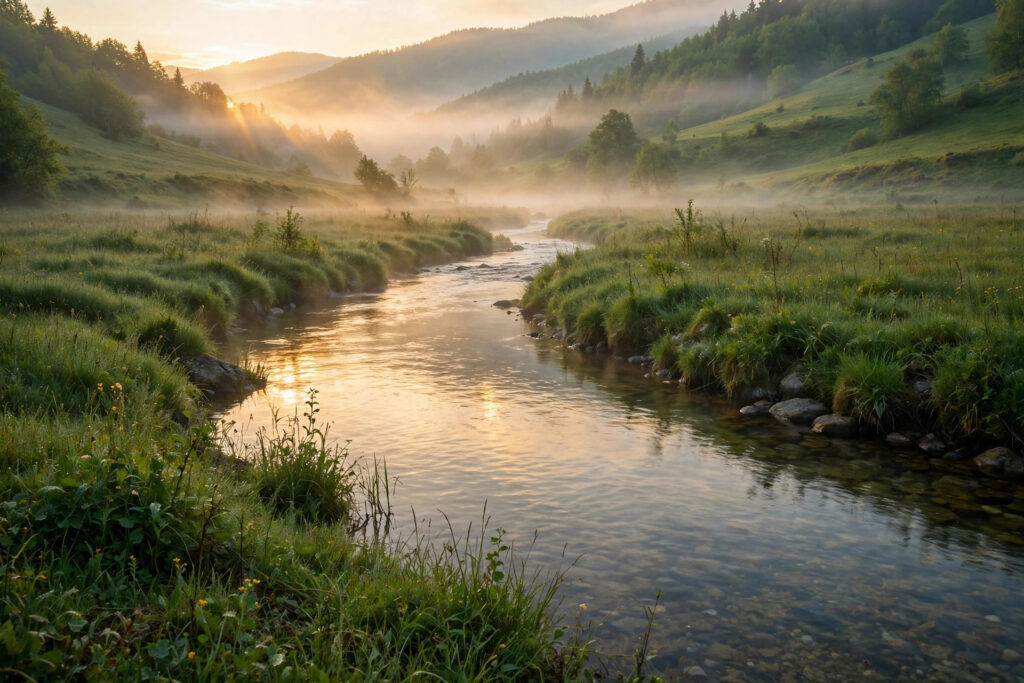
A clear river is one of the most reassuring dreams a person can have. The water is transparent, you can see through it, and it moves along without force or threat. In Islamic dream interpretation, this is generally read as a good sign. It points to a clear conscience, a peaceful heart, and a life that is moving in a healthy direction.
If you saw a clear river and felt calm while watching it, the dream may be reflecting something that is already true: your affairs are in order, your intentions are honest, and you are at peace with a decision you have made. It can also be a sign of what is coming — a period of ease after difficulty, or a time when things start to make sense again after a confusing stretch. Clean water has long been linked with purity and blessing, so a clean river often carries that same feeling of being blessed and looked after.
For a person who has been worried about money, a clear river can point to honest provision that continues steadily, without sudden shocks. For a person who has been worried about health, it can point to recovery and strength returning, the way clear water refreshes everything it touches. For a student, or anyone learning something new, it can point to understanding becoming clearer — the pieces finally fitting together.
The size of the river adds another layer. A wide, clear river can suggest abundance — more than enough, with room to share. A small, clear stream-like river can suggest something quieter but still good: contentment, a simple life, and peace that does not depend on having a lot. Neither is better than the other. What matters is the clarity and the calm.
If you were drinking from the clear river, or washing in it, the meaning becomes even more positive, and those dreams have their own sections below. But even just seeing the river and standing beside it is, in most readings, a hopeful dream. It is the kind of dream people wake up from feeling lighter, and that lightness is part of the message. When a dream leaves you peaceful, take that peace seriously. It may be telling you that you are on the right path, and that you do not need to change direction in a hurry.
One honest caution, though: a clear river does not mean life will suddenly become perfect. It means the foundations are sound. You still have to walk the path, make good choices, and keep your affairs in order. The dream is encouragement, not a guarantee — and encouragement is often exactly what a person needs.
Seeing a Muddy or Dirty River in a Dream
A muddy river is almost the opposite picture. The water is brown, cloudy, or full of things you cannot see through. You cannot tell how deep it is, what is under the surface, or where it is safe to step. That uncertainty is the heart of the meaning.
In classical Islamic dream literature, muddy or dirty water is generally read as a sign of confusion, worry, or trouble. It can point to a situation in life that is not clear — a decision you are unsure about, a relationship that has become complicated, or a source of income that does not feel quite right. It can also point to the dreamer’s own state of mind: feeling clouded, tired, or pulled in too many directions at once.
If you dreamed of a muddy river and felt uneasy, ask yourself what in your waking life feels muddy right now. Is there a deal, a promise, or a plan that you do not fully understand? Is there a worry you have been avoiding? Is there a habit, or a source of money, that leaves you with a nagging doubt? The dream may be bringing that question to the surface so you can deal with it in daylight, instead of carrying it quietly.
A muddy river does not always mean something bad will happen. Often it means something needs cleaning up — a misunderstanding that needs an honest conversation, a financial matter that needs checking, or a routine that needs simplifying. Water becomes clear again when the mud settles, and in the same way, many muddy situations become clear once a person stops, looks carefully, and takes one honest step.
There is one detail worth noticing: were you in the water, or only looking at it? If you were only watching a muddy river from the bank, the trouble may be something you are observing rather than something you are caught in — a problem in the family, at work, or around you. If you were standing in the muddy water, or trying to drink from it, the meaning feels more personal. It may be time to be careful about what you are taking in, whether that is information, advice, or a new commitment.
If you woke up from a muddy river dream feeling heavy, do not panic. Treat it as a prompt, not a punishment. Check the areas of your life that feel unclear, speak to someone you trust, make your intentions clear, and ask for guidance in prayer. Clarity often follows honesty, and this dream may simply be pointing you toward that honesty.
Crossing a River in a Dream
Crossing a river is one of the most common river dreams, and one of the most meaningful. You start on one bank and you need to get to the other side. There may be a bridge, a boat, stepping stones, or nothing at all — just you and the water. How you cross, and whether you reach the other side, changes the meaning a great deal.
In Islamic dream interpretation, crossing a river is generally read as passing through a difficulty or moving from one stage of life to another. The far bank is the new situation: a new job, a new home, a marriage, a recovery, or simply a problem finally left behind. The river in the middle is the transition — the uncertain middle where you are no longer where you started, and not yet where you are going.
If you crossed easily, on a bridge or in a boat, and arrived safely, the dream is usually a hopeful one. It suggests that a difficulty you are facing will pass, and that the way through is clearer than it feels right now. A bridge in particular is a reassuring detail: it suggests help, a plan, or a person who will support you across. A boat can carry a similar meaning — you are not crossing alone, and you have something carrying you.
If you crossed by wading or swimming, and it took effort but you made it, the meaning is similar but with an extra layer: you will get through this by your own effort and patience. It may not be quick, and it may not be comfortable, but the far bank is reachable. Many people have this dream when they are in the middle of a hard time, and it works like encouragement — keep going, you are closer than you think.
If you could not cross, or you turned back halfway, the dream may be reflecting a fear or a block. Perhaps a decision feels too big, or a change feels too risky. That does not mean the change is wrong. It may mean you need more preparation, more advice, or more time. Sometimes turning back in a dream is wisdom, not failure — a sign to wait until the water is calmer, or until you have a better way across.
Pay attention to what was waiting on the other side. If the far bank looked green, bright, or welcoming, the new phase is likely to bring relief. If it looked dark or empty, you may still have questions about the change ahead, and it is worth thinking those questions through before you commit. Either way, a crossing dream is rarely about the river alone. It is about where you are going, and what you are willing to leave behind to get there.
Drowning in a River in a Dream
Drowning is a frightening dream, and it is natural to wake up from it with your heart racing. It is also one of the dreams people worry about most. The important thing to remember is that a frightening dream is not a prediction. In Islamic dream interpretation, drowning in a river is most often read as a picture of feeling overwhelmed — not as a literal event that will happen.
Water that covers you completely can stand for worries that have piled up until they feel too much: debts, responsibilities, grief, illness, or pressure from people around you. When the water rises over your head in a dream, it may be showing you how it feels to carry all of that at once. The dream is not saying you will sink. It is showing you the weight you are already carrying.
If you were drowning but someone pulled you out, or you managed to reach the surface and breathe again, that rescue is a central part of the meaning. It suggests help is available, or that relief will come — through a person, a change in circumstances, or your own effort at the right moment. Many people dream of almost drowning and then being saved, and that turning point matters more than the fear that came before it.
If you dreamed of another person drowning, the meaning often shifts to concern for that person. You may be worried about them, or you may sense they are struggling and do not know how to help. The dream can be a prompt to check on them, offer support, or pray for them — a simple, practical response to a worrying dream.
What should you do after a drowning dream? First, breathe and remind yourself it was a dream. Then look honestly at what feels overwhelming in your life. Is there one pressure that stands out above the rest? Can it be shared, reduced, or handed over in part to someone else? Can a debt be renegotiated, a workload be eased, or a difficult conversation finally be had? Drowning dreams often appear when a person has been coping alone for too long, and the healthiest response is to stop coping alone.
There is also a spiritual side. Feeling overwhelmed can be a sign to return to the basics — regular prayer, honest conversation with God, and small steady habits that bring calm back. You do not need a dramatic response. Small, steady steps are often what bring a person back to the surface, in a dream and in real life.
Drinking River Water in a Dream
Drinking from a river is a quiet, simple dream, and its meaning is usually just as simple: you are taking something in. What you take in depends on the water. Clean water and dirty water give very different readings, so the first question is always about the water itself.
Drinking clean, sweet river water is generally read as a good sign in classical Islamic dream literature. It can point to benefit and provision — something good coming into your life that you will actually enjoy, not just hear about. It can also point to knowledge: learning something useful, understanding something that was unclear, or receiving guidance that helps you make a better decision. For a person who is unwell, it can point to healing and strength. For a person who is thirsty in a spiritual sense — feeling distant, dry, or in need of direction — it can point to a return to faith and peace.
The amount matters too. Drinking a little and feeling satisfied suggests contentment — you have enough, and you know it. Drinking deeply and still feeling refreshed suggests abundance, or a period of learning and growth that will last a while. Drinking from a river with your hands, in the old simple way, can suggest humility and closeness to a natural, honest way of living.
Drinking dirty, salty, or bitter river water carries the opposite feeling. It can point to taking in something harmful — wrong information, a bad influence, or a source of income that brings trouble with it. It can also point to a worry that is making life taste bitter, even when everything looks fine from outside. If you drank dirty water in a dream and woke up feeling uneasy, it is worth asking what you have been taking in lately: the news you follow, the people you listen to, the deals you have agreed to. Not everything that is offered is worth drinking.
If you offered river water to someone else in the dream, the meaning often turns outward. You may be in a position to help, teach, or support another person. Clean water given freely is a generous image — knowledge or help shared without expecting anything back. That, too, is a hopeful sign, and it often appears for people who are already thinking about how they can be useful to others.
Seeing a River Flooding in a Dream
A flooding river is powerful and hard to ignore. The water rises, spreads beyond its banks, covers roads and fields, and sometimes reaches the dreamer’s home. It is a dream about too much of something — too much water, too much pressure, too much change arriving too fast.
In Islamic dream interpretation, a flood is generally read as a warning or a sign of a major test. It can point to a trial affecting a family, a community, or a whole area — illness spreading, a dispute growing, or a hardship that touches more than one person. On a personal level, it can point to emotions or responsibilities overflowing: a situation that was manageable until it suddenly was not.
But flooding is not always a bad sign, and the details matter. If the flood water was clean and it watered the land without destroying homes, some readings treat it as a sign of abundance and blessing — provision arriving in a big way, like rain after a drought. If the flood was muddy, destructive, or frightening, the reading leans toward warning: be careful, protect what matters, and do not take on more than you can handle right now.
Where you were in the flood also matters. Watching a flood from a safe, high place suggests you will see a difficulty but not be swept into it — you may witness a problem in the family or at work, and your role may be to help or to stay steady while others struggle. Being caught in the flood suggests you are already in the middle of something overwhelming, and the dream may be urging you to find higher ground: to step back, simplify, and protect your health, your family, and your peace of mind.
If flood water entered your house in the dream, think about what the home represents for you — safety, family, privacy, stability. Water coming in can point to a worry entering the home, or a problem that has stopped being outside and started affecting family life. That is not a reason to panic. It is a reason to talk openly at home, to deal with the issue together, and to make sure the people closest to you know they are not facing it alone.
After a flood dream, the practical steps are simple and steady: do not make a big decision while you feel flooded. Wait for the water to settle, in the dream and in your mind. Talk to someone you trust. Check your commitments and see if anything can be postponed or shared. And keep up the habits that keep you grounded, because floods pass — and what matters is what is still standing when the water goes down.
Seeing a River Drying Up in a Dream
A river drying up is a sad image. The bed is cracked, the water is gone or reduced to a trickle, and the life that depended on the river has nowhere to go. It is natural to wake up from such a dream feeling worried, and the meaning does reflect a kind of loss — but it is usually a loss that can be understood and addressed, not a final verdict.
In classical interpretation, a drying river often points to a loss of provision, energy, or hope. It can reflect a time when work has slowed down, income has become uncertain, or a person feels drained — physically, emotionally, or spiritually. For a business owner, it can mirror a quiet period in trade. For a student or worker, it can mirror a period when effort does not seem to bring results. For anyone, it can mirror the feeling of running on empty.
It can also point to a relationship or a part of life that has gone dry: a friendship that has faded, a marriage that feels distant, or a practice of faith that has become routine and lifeless. The river in the dream may be showing you what has already happened quietly, so that you can notice it and do something about it.
Before taking the dream as a warning about the future, ask whether it is describing the present. Are you tired in a way that rest has not fixed? Has something that used to give you life — a habit, a friendship, a place, a practice — quietly disappeared from your days? If so, the dream may be less about what will happen and more about what needs restoring now.
The hopeful part of this dream is that rivers can flow again. Rain comes, a blockage is cleared, a spring opens. In the same way, a dry period in life can end. The dream may be inviting you to look for the source: to renew an intention, to restart a good habit, to seek work or help, or to reconnect with people who bring life back. It may also be inviting you to be patient — dry seasons are real, and they do not last forever.
If the river in your dream dried up completely and then you saw water returning, even a little, take that as the heart of the dream. Return and renewal are powerful themes, and a small stream after a dry bed can mean more than a full river in easier times. It suggests that provision, hope, or faith can come back, even when it looks as if it has gone for good.
Bathing in a River in a Dream
Bathing in a river is a dream about washing — and washing, in dream language, is almost always about cleansing. It can mean cleansing the body, the heart, or a situation. The water carries away what is dirty, and the person comes out cleaner than before.
In Islamic dream interpretation, bathing in clean river water is generally read as a good sign. It can point to repentance and a fresh start — turning away from a mistake and feeling clean again. It can point to relief from worry, recovery from illness, or the end of a difficult chapter. It can also point to a simple, honest kind of peace: the feeling of being washed clean after a long, dusty journey.
If you bathed in the river and felt refreshed and light afterwards, the dream is likely reflecting — or promising — that kind of relief. It may appear after a person has made a sincere decision to change something, or after a long worry has finally been resolved. The dream confirms the feeling: you are clean, you can start again, you do not have to carry the old dirt with you.
Bathing in dirty or cold river water gives a different picture. Dirty water while bathing can suggest that an attempt to fix something is not working, or that the method itself needs changing — you cannot get clean in dirty water. Very cold water can suggest a shock, a hardship, or a situation that feels harsh, even if it is meant to help. Very hot water can suggest anger, pressure, or a situation that has become too intense.
Notice who else was there. Bathing alone in a river often points to a private matter — a personal change, a private worry, or a decision between you and God. Bathing with family or in a modest, calm setting can point to a shared relief, or a family matter becoming cleaner and simpler. The dream is rarely about the act of bathing itself. It is about what is being washed away, and what is left when the water has done its work.
If you woke up from a bathing dream feeling clean and calm, let that feeling guide your day. It may be a good day to make amends, to let go of a grudge, to tidy up a loose end, or to simply begin again with a clear heart. Clean water and a clean start often go together.
Swimming in a River in a Dream
Swimming is different from bathing, and different from crossing. When you swim in a river, you are not just passing through — you are in the water, moving with it or against it, using your own strength to stay afloat and to get where you want to go. That effort is the key to the meaning.
Swimming easily in a calm river is generally read as a good sign. It suggests you are handling life well — you know how to move through your responsibilities, your work, and your relationships without being overwhelmed. You may be learning, growing, or managing a new situation with more skill than you give yourself credit for. If you swam with confidence and enjoyed it, the dream may be reflecting a period of competence and ease.
Swimming against a strong current is a different picture. It suggests effort, resistance, and a goal that is taking real work to reach. You may be swimming against the opinions of people around you, against a difficult market, or against a habit you are trying to change. The dream does not say you will fail. In fact, swimming against the current and still moving forward is a strong image — it says you have the strength to keep going, even when the water pushes back.
Swimming with the current can suggest ease, but also a question: are you going where you want to go, or simply where the water is taking you? A river that carries you gently in a good direction is a blessing. A river that carries you somewhere you did not choose is a prompt to check your direction. Are your days flowing toward something you actually want, or are you drifting?
Struggling to swim, or feeling tired in the water, often mirrors waking life directly. You may be working hard but feeling as if you are not getting anywhere. That feeling deserves attention — not panic, but honest attention. Perhaps you need rest, or help, or a different approach. Swimming is a skill, and even good swimmers need to rest, float, and let the water hold them for a while.
If you swam and reached the far bank, or a safe shore, the dream ends on a hopeful note: effort leads somewhere. If you were swimming and someone helped you, or taught you, that help may be closer in real life than you think. Swimming dreams are often less about the river and more about you — your strength, your direction, and your ability to keep moving through deep water.
Seeing a River Flowing Fast or Slow in a Dream
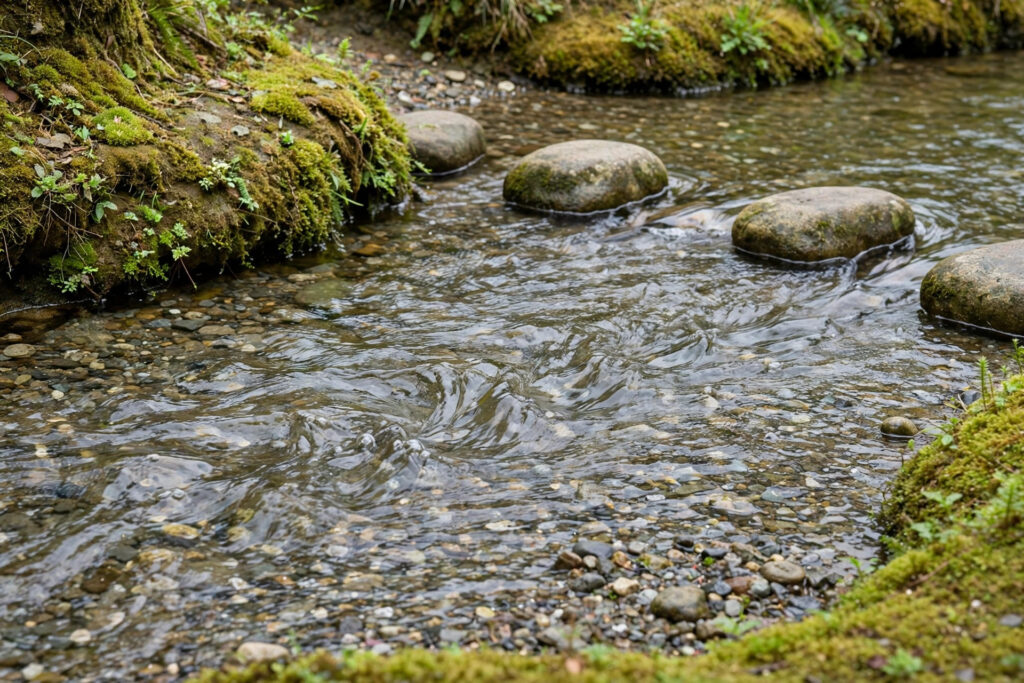
The speed of a river changes everything about it. A slow river and a fast river are not the same dream, even if the water looks the same. Speed, in dream language, often stands for the pace of life itself.
A fast-flowing river
A fast river can be exciting or frightening, and your feeling in the dream usually tells you which one it was. If the fast water felt powerful but you were safe — watching it from the bank, or crossing it with help — it can point to rapid change, quick provision, or a period when life moves fast and opportunities come quickly. Things may be happening sooner than you expected: a decision, a move, a new job, a change in the family. Fast water can also point to strong emotions, a busy season, or a time when you need to stay alert and make decisions quickly.
If the fast water felt dangerous, or you were afraid of being swept away, the meaning leans toward warning. Life may be moving too fast right now. You may be taking on too much, agreeing too quickly, or letting events carry you before you have had time to think. The dream may be asking you to slow down — not to stop the river, which you cannot do, but to find a safe place to stand while it rushes past.
A slow-flowing river
A slow river is usually a calmer picture. It can point to a steady, patient phase of life — provision coming regularly rather than in a rush, a relationship growing slowly and surely, or a project moving forward step by step. Slow water is not stuck water. It is still moving, just without noise and hurry. For a person who has been anxious or rushed, a slow river can be a reassuring dream: things are moving, even if you cannot see the progress yet.
But a river that is too slow — barely moving, or almost still — can point to a different feeling: stagnation, delay, or a sense that life has paused. If the water looked stale or lifeless as well as slow, the dream may be reflecting boredom, a lack of direction, or a situation that needs fresh movement. The question to ask is simple: does the slowness feel peaceful, or does it feel stuck? Peaceful slowness is contentment. Stuck slowness is a prompt to make a small change, to stir the water, and to get moving again in a small way.
Falling into a River in a Dream
Falling into a river is a sudden dream. One moment you are on solid ground, the next you are in the water, surprised and wet. That suddenness is the heart of the meaning — something unexpected, a change you did not plan, or a situation you slipped into without meaning to.
In Islamic dream interpretation, falling into a river is often read as falling into a difficulty or a trial that arrives without warning. It can point to a sudden problem at work, an unexpected expense, a piece of news that changes your plans, or a relationship that takes a turn you did not see coming. It can also point to a mistake — stepping where you should not have stepped, agreeing to something too quickly, or trusting a situation that was less solid than it looked.
What happens after the fall matters more than the fall itself. If you climbed out quickly, shook off the water, and carried on, the dream suggests the difficulty will be brief and manageable — a shock, not a disaster. If someone helped you out, help may be available in real life too, perhaps from a person you had not thought to ask. If you stayed in the water and swam, the dream moves into the swimming meaning above: effort, and the ability to cope.
If you fell into clean water, the shock may be less serious than it felt. A surprise can still be a good one — an unexpected opportunity, a sudden change that turns out well, or a new path opening when the old one is blocked. If you fell into muddy or fast water, take the dream as a nudge to be careful about where you step in the coming days: check a deal before signing, think before agreeing, and watch your footing in a situation that looks solid but may not be.
Falling dreams often appear when a person feels a loss of control. The practical response is to regain a little control in small ways: slow down, check the ground before you step, and do not rush into a new commitment while you still feel unsteady. A fall in a dream does not mean you will fall in real life. It often means you are already feeling unsteady, and your mind is asking you to be careful.
Seeing a River at Night in a Dream
A river at night is a quieter, more mysterious dream. The water is dark, the banks are hard to see, and the sound of the river may be the only thing you can follow. Night changes the feeling of any dream, and a river at night usually points to what is hidden, uncertain, or not yet clear.
In classical interpretation, night often stands for confusion, secrecy, or a period when guidance is hard to see. A river at night can therefore point to a situation where you do not have the full picture — a decision that has to be made without all the facts, a worry that grows larger in the dark, or a part of life that feels uncertain. It can also point to fear itself: the fear of the unknown, rather than any specific danger.
But night is not only about fear. If the river at night felt peaceful — moonlight on the water, stars reflected, the sound of the flow steady and calm — the dream can carry a gentler meaning. It can point to a private, spiritual time: prayer at night, quiet reflection, or a closeness to God that is felt most when the world is still. A calm river at night can be a beautiful image of a heart at rest, even when the surroundings are dark.
Notice what gave light in the dream. Moonlight, a lamp, or lights on the far bank can suggest guidance is present, even if it is faint. A river you could hear but not see can suggest that you are being guided by something you cannot fully see yet — trust, instinct, or faith. A river at night with no light at all, and a feeling of being lost, suggests it may be wise to wait for morning before making a big decision. You do not have to cross a river in the dark if you can wait for daylight.
If you dreamed of a river at night and woke up feeling thoughtful rather than afraid, take the dream as an invitation to reflection. What is unclear right now? What would help you see more clearly — more information, more time, a conversation with someone wise? Night dreams often ask for patience, and morning usually brings a clearer view of the same river.
Fishing in a River in a Dream
Fishing is a patient activity. You cast a line, you wait, and you hope. A fishing dream carries that same feeling of patience and hope, and its meaning is usually connected with seeking provision, opportunity, or an answer.
In Islamic dream interpretation, fishing in a river is generally read as seeking lawful provision. The fish is the provision, and the act of fishing is the effort — work, a business idea, a job search, or any honest attempt to earn a living. Catching a fish, especially a large or beautiful one, is usually a good sign: effort will bring a result, and the result may be better than expected. Catching many fish can point to abundance, or to several opportunities arriving at once.
Catching nothing, on the other hand, does not mean failure. It often reflects the waiting itself — a period when you are trying, but the result has not come yet. Fishing dreams appear often for people who are waiting for a job, a payment, an answer, or a decision. The dream may be reminding you that fishing takes time, and that an empty line today does not mean the river is empty.
The way you fished also matters. Fishing with a rod and line suggests patience and skill — a careful, steady approach. Fishing with a net can suggest a bigger effort, or a plan to gather a lot at once. Fishing with your hands can suggest a direct, personal effort, or a simple approach that works because it is honest. If your line broke, or your net tore, the dream may be pointing to a plan that needs fixing — a method that is not working, or a tool that needs replacing.
If you gave the fish you caught to someone else, the meaning turns generous: provision shared, or help given to another person. If someone else gave you a fish they caught, it can suggest help or provision coming from an unexpected person. Either way, fishing in a river is rarely a dream about fish alone. It is about the search — what you are hoping to catch in your waking life, and whether you are willing to wait patiently for it.
Seeing a River with Fish in a Dream
A river full of fish is a lively, hopeful image. The water is alive, moving, and full of possibility. In dream interpretation, fish are one of the most consistently positive symbols, and a river full of them is usually read as a sign of provision, opportunity, and blessing.
Fish in a clear river is the most reassuring version of this dream. It can point to lawful earnings, a growing business, a new opportunity, or a family that is thriving. The fish are visible, the water is clear, and everything is in order — that combination suggests provision that is both plentiful and clean. For a person hoping for a child, fish have also been read in the wider tradition as a hopeful sign connected with family and new life, though that reading depends very much on the dreamer’s own situation and hopes.
Fish in a muddy river is a more mixed picture. The provision or opportunity is there, but it is harder to see clearly, or harder to reach without getting dirty. It may suggest an opportunity that needs careful checking before you take it, or earnings that come with complications. The fish are still a good sign — the opportunity is real — but the muddy water is a reminder to be careful about how you take it.
Dead fish in a river, or fish struggling out of the water, carry a sadder meaning. They can point to a lost opportunity, a plan that did not work, or provision that has been wasted. It can also point to a feeling of being out of place — like a fish out of water, in a situation that does not suit you. If you dreamed of dead fish, do not take it as a final judgement. Take it as a prompt to look at what has been lost, what can be saved, and what new water — a new place, a new approach — might be needed.
Watching fish swim without trying to catch them can also be meaningful. It can suggest contentment — you can see the provision around you, you are not desperate to grab it, and you trust that what is meant for you will come. Or it can suggest a missed chance — fish swimming past while you only watch. Your feeling in the dream will usually tell you which one it was. Peace points to contentment. Regret points to a chance worth taking next time.
Walking Along a Riverbank in a Dream
Walking along a riverbank is one of the gentlest river dreams. You are not in the water, you are not crossing it, and you are not in danger. You are beside it, walking at your own pace, watching it flow. That position — beside the river, not in it — is the key to the meaning.
In Islamic dream interpretation, walking along a riverbank is generally read as a sign of a steady, thoughtful phase of life. You are moving forward, but calmly. You can see the flow of life without being swept into it. It can point to a person who is observing, learning, and thinking before acting — someone who is taking time to understand their situation instead of rushing into it.
If you were walking with someone — a family member, a friend, or a person you could not quite see — the dream may be about that relationship. Walking together beside a river is a peaceful image of companionship: two people moving in the same direction, sharing the journey. If you were walking alone and felt peaceful, it can point to contentment in your own company, or a period of reflection that is doing you good.
The condition of the bank matters too. A green, clean bank with trees and soft ground suggests a pleasant, settled life — a good home, a stable situation, and a path that is comfortable to walk. A broken, muddy, or difficult bank suggests the path itself is hard, even if the river looks fine. You may be on the right road, but the walking is tiring, and you may need rest or support.
Walking along a riverbank can also be a dream about a decision you have not made yet. You are walking beside the question, looking at it from the bank, not yet stepping in. That is not indecision — it is wisdom. Some decisions are better made after a long walk beside the river, when you have seen it from many angles and you know where the safe crossing is.
If you woke up from a riverbank walk feeling calm, let that calm stay with you. It may be the dream’s main message: you do not need to jump in, cross, or fight the current today. Sometimes the right thing is simply to walk beside the river for a while, watch it flow, and let your thoughts settle before you decide what to do next.
What to Do After Dreaming of a River
A river dream can leave you feeling peaceful, worried, or simply thoughtful. Whatever you felt, there are a few simple, practical steps that fit the Islamic approach to dreams, and they work for good dreams and worrying dreams alike.
First, do not rush to a conclusion. A dream is not a verdict, and a single dream does not decide your future. Sit with it for a little while. Write down what you remember — the colour of the water, whether you were in it or beside it, how you felt, and what happened in the end. Dreams fade quickly, and the details that matter most are often the first ones you forget.
Second, think about your own life, not only the dream book. A river dream for a person worried about money will mean something different from the same dream for a person worried about health or a relationship. Ask yourself what is flowing, blocked, muddy, or dry in your life right now. The dream often points to something you already know, deep down, and gives you a picture for it.
Third, if the dream was good — a clear river, a safe crossing, a good catch — be grateful. Gratitude is the natural response to a good dream, and it is also a way of keeping the blessing in your life. You do not need to tell everyone about it. A quiet thankfulness, and a decision to keep doing what is right, is enough. Some people choose to give charity after a good dream, as a way of sharing the blessing, and that is a beautiful habit if you are able to do it.
Fourth, if the dream was frightening — drowning, flooding, falling in — do not let it frighten you into a big decision. The traditional advice after a bad dream is simple: seek refuge, do not dwell on it, and do not spread it around as if it were a prediction. Pray, ask for protection and guidance, and then deal with the practical side: what in your life feels overwhelming, and what small step would make it lighter? Fear in a dream is often a call to prayer and to practical care, not a warning that something terrible is certain to happen.
Fifth, talk to someone you trust if the dream stays with you. A spouse, a parent, a close friend, or a person of knowledge can help you see the dream from another angle. Sometimes saying the dream out loud is enough to make its meaning clear. If a dream repeats — the same river, the same crossing, the same fear, night after night — it is worth paying more attention, and worth asking for guidance from someone wise, because a repeated dream is often a repeated message.
Finally, keep your daily habits steady. Prayer, honesty in your dealings, care for your family, and small acts of kindness do more to shape the meaning of a dream than any amount of worrying about it. A river flows one day at a time, and a life is lived the same way. Do the next right thing, and then the one after that, and let the river take care of the rest.
A Note on Sources and a Clear Disclaimer
The meanings in this article come from general guidance in classical Islamic dream literature, including works attributed to Ibn Sirin and the wider interpretive tradition associated with Imam Jafar Sadiq, read alongside the common sense of the dreamer’s own life and feelings. They are presented as general guidance for reflection, not as a certain ruling about any one person or any one future event. Dream interpretation has always depended on the dreamer, the details of the dream, and the circumstances around it, and no article can replace that personal judgement.
Please note clearly: no numbered hadith or verse is quoted in this article. You will not find a numbered hadith citation or a numbered verse citation here, because this article does not quote any. The meanings offered are general guidance from classical dream literature, not a certain ruling, and they should be read as an aid to reflection and prayer, not as a religious verdict or a prediction about what will happen. If a dream leaves you deeply worried, or if it concerns a serious decision, speak to a person of knowledge you trust, and make your decision with prayer, advice, and careful thought.
Frequently Asked Questions About Seeing a River in a Dream
Is seeing a river in a dream a good sign in Islam?
Most of the time, yes — especially when the water is clear, calm, and flowing well. A clear river is generally read as a good sign, pointing to peace, honest provision, and a life moving in a healthy direction. But the details matter. A muddy, flooding, or frightening river can point to worry or a difficulty that needs attention. The feeling you had in the dream, and the condition of the water, are the two things to look at first. A good sign in a dream is encouragement, not a guarantee, and a worrying sign is a prompt to reflect and take care, not a prediction of harm.
What does it mean to cross a river in a dream?
Crossing a river usually means moving from one phase of life to another, or getting through a difficulty. If you crossed safely — by a bridge, a boat, or your own swimming — it is generally a hopeful sign that a problem will pass and that you will reach the other side. If you could not cross, or you turned back, it may mean you need more time, more preparation, or a better plan before you make a big change. What was waiting on the far bank, and how you felt when you arrived, will tell you more about what the new phase may bring.
What does drowning in a river mean in a dream?
Drowning in a river most often reflects feeling overwhelmed in waking life — too many worries, debts, responsibilities, or pressures at once. It is not a prediction that you will drown or that something terrible will happen. If you were saved, or you reached the surface, that is a hopeful part of the dream, suggesting help or relief will come. After such a dream, it is wise to look at what feels overwhelming, to share the load if you can, to pray for ease, and to take small practical steps to make life lighter.
What does drinking river water in a dream mean?
Drinking clean river water is generally read as a good sign — benefit, knowledge, healing, or provision coming into your life. Drinking dirty, salty, or bitter water carries the opposite feeling, and can point to taking in something harmful, whether that is wrong information, a bad influence, or a source of income that brings trouble. The taste and clarity of the water are the most important details. Clean water taken in gladly is a hopeful image; dirty water is a prompt to be careful about what you are accepting into your life.
What does a flooding river mean in a dream?
A flooding river usually points to something overflowing — pressure, emotions, responsibilities, or a major change arriving quickly. If the flood was destructive or frightening, it is generally read as a warning to be careful, to protect what matters, and to avoid taking on more than you can handle. If the flood water was clean and it watered the land without destroying homes, some readings treat it as a sign of abundance. Where you were in the flood — safe on high ground, or caught in the water — also changes the meaning, so remember your position as well as the water.
Should I worry if I dream of a river drying up?
There is no need to panic, but it is worth paying attention. A drying river often reflects a feeling of loss — provision becoming tight, energy running low, or hope fading in some area of life. It may be describing a dry period you are already in, rather than predicting a new one. The hopeful side of this dream is that rivers can flow again. Look for what needs restoring — rest, a good habit, a reconnection, honest work, or prayer — and take one small step toward it. A small stream returning after a dry bed can be a powerful sign that renewal is possible.
Final Thoughts
A river is one of the oldest images in the world, and it is no surprise that it appears so often in dreams. It flows whether we watch it or not. It gives life, it tests us, it carries us, and sometimes it frightens us. A dream of a river is often a dream about the flow of your own life — where it is clear and where it is muddy, where it is moving fast and where it has slowed, where you are standing on the bank and where you are already in the water.
If your dream was a clear river, take the peace it offered and carry it into your day. If it was a muddy river, a flood, or a fall, take the warning gently and deal with the practical side — one honest conversation, one small change, one prayer at a time. If you crossed the river safely, remember that feeling when the next difficulty comes, because you have already seen, in a dream, what getting to the other side looks like.
Above all, remember that a dream is a signpost, not a destination. It can point you toward reflection, gratitude, caution, or hope — but it cannot walk the road for you. Read the meaning, think about your own life, pray for guidance, and then live your day with a clear heart. The river will keep flowing, and so, with patience and care, will you.
