There are some dreams you forget before breakfast, and then there are dreams that stay with you all day. A horse is usually one of the second kind. Maybe you were riding it across an open field, or it was standing quietly in your courtyard, or it was running towards you and you woke up with your heart beating fast. Whatever the scene was, you probably woke up wondering the same thing millions of people have wondered for centuries: what does it mean?
In Islamic tradition, dreams are taken seriously — but not superstitiously. A dream is not a fortune-telling machine. It is more like a mirror: it can reflect what is going on inside you, what you are hoping for, what you are afraid of, and sometimes, by Allah’s will, it can carry a glad tiding or a gentle warning. The horse is one of the oldest and most respected symbols in that tradition, because in real life the horse has always meant strength, honour, travel, and provision.
This article walks through the most common horse dreams one by one — the colours, the riding, the chasing, the falling, the wounded horse, the horse in your house — and explains what classical Islamic dream literature generally says about them, what they might mean for different people, and what you can actually do after such a dream. Nothing here is a verdict on your future. It is guidance, written in plain language, so you can think about your dream calmly instead of worrying about it.
Quick Summary
- In Islamic dream interpretation, a horse is generally a positive symbol. Classical scholars generally associate it with strength, honour, dignity, victory, lawful provision, and a good reputation.
- The details matter more than the horse itself: its colour, its health, whether it is calm or wild, whether you are riding it or running from it, and how you felt in the dream.
- A calm, healthy, beautiful horse — especially a white one — is traditionally read as a good sign: honour, peace, success, or a blessing on the way.
- A wild, wounded, or dead horse, or falling off a horse, is traditionally read as a warning: a loss of control, a setback, a broken promise, or a need to slow down and check your direction.
- Riding a horse confidently usually points to authority, a journey, a new responsibility, or progress in a goal you care about.
- Being chased by a horse often reflects pressure, a fear you are avoiding, or a powerful situation in your life that feels bigger than you right now.
- No single interpretation fits everyone. The same dream can mean something different for an unmarried person, a married person, a student, or a businessperson — because their lives, hopes, and worries are different.
- Dream interpretation in Islam is guidance, not certainty. A good dream should lead to gratitude and good action; a worrying dream should lead to prayer, reflection, and charity — not fear.
Why the Horse Matters So Much in Islamic Dream Interpretation
To understand why a horse appears in dreams with such weight, it helps to remember what the horse meant in the world the classical scholars lived in. A horse was not a hobby. It was transport, it was livelihood, it was the difference between reaching your destination and being stranded. A good horse meant you could travel, trade, defend your family, and arrive with dignity. A sick or lost horse was a real loss.
The Quran mentions horses among the blessings Allah has given people, and describes them as a source of beauty and strength. That is a general, well-established point, and it is why horses carry a dignified meaning in Islamic culture. The Prophet Muhammad (peace be upon him) also spoke of goodness being tied to the forelocks of horses, in a well-known general sense — horses were linked with blessing and lawful gain, not with bad luck.
So when classical dream interpreters wrote about horses, they were not inventing a symbol out of thin air. They were drawing on what a horse meant to everyday life: power you can direct, honour you can earn, a journey you can complete, and provision that comes through effort. That is the starting point for almost every horse dream: the horse stands for a kind of strength in your life — and the dream shows you what state that strength is in.
But — and this is important — a symbol is not a sentence. A horse in a dream does not automatically mean “you will become rich” or “something bad will happen.” The scholars who wrote the classical books of dream interpretation, most famously Ibn Sirin, always insisted on the same thing: look at the whole dream, look at the dreamer’s life, and remember that interpretations vary. Two people can dream of the same horse and need completely different advice.
What Classical Islamic Dream Literature Says
The most quoted name in Islamic dream interpretation is Muhammad Ibn Sirin, a scholar of the early Islamic generations whose book of dream interpretation has been read, copied, and quoted for over a thousand years. Another name you will often hear is Imam Jafar Sadiq, to whom a tradition of dream interpretation is also attributed in classical literature. Their works are not collections of magic formulas. They are careful attempts to read symbols in the light of the Quran, the Sunnah, language, and human experience.
What do these classical sources generally say about horses? A few themes come up again and again, and they are worth knowing before we get into the individual scenarios:
First, a horse is generally associated with honour and authority. Riding a horse in a dream, especially riding it well, was traditionally read as a sign of dignity, leadership, or a position of respect — the kind of thing that comes to a person who can handle responsibility.
Second, a horse is associated with lawful provision and strength. A strong, healthy horse suggested that the dreamer’s livelihood and standing were sound. A weak or sick horse suggested the opposite: that something in the dreamer’s affairs needed attention.
Third, colour carried meaning. White was linked with goodness, purity, and victory. Black was linked with power, but also with seriousness and sometimes with sorrow or difficulty, depending on the rest of the dream. Brown and other colours fell in between, and were read more through the horse’s condition and behaviour than through the colour alone.
Fourth, control mattered. A horse that obeyed you meant your affairs were in order. A horse that threw you, ran away, or refused to move meant something in your life was not under control — a plan, a relationship, a habit, a decision.
It is worth being honest here: many of the very specific claims you will find online — “Ibn Sirin said exactly this about a brown horse on a Tuesday” — are not reliably traceable to the classical texts. The books have been translated, abridged, and added to many times over the centuries. So in this article, where a meaning is a broad, well-attested theme of the classical literature, it is stated as such. Where something is uncertain, it is said plainly. That honesty is part of taking the tradition seriously, not a weakness in it.
The other classical principle worth holding onto is this: a good dream is from Allah, and a disturbing dream may come from one’s own worries or from Shaytan. The Prophet Muhammad (peace be upon him) taught that if a person sees a good dream, they should praise Allah and share it with someone they trust, and if they see a bad dream, they should seek refuge in Allah, not dwell on it, and not spread it around. That teaching matters more than any symbol dictionary, because it tells you what to do — and what not to do — after any dream.
Seeing a White Horse in a Dream
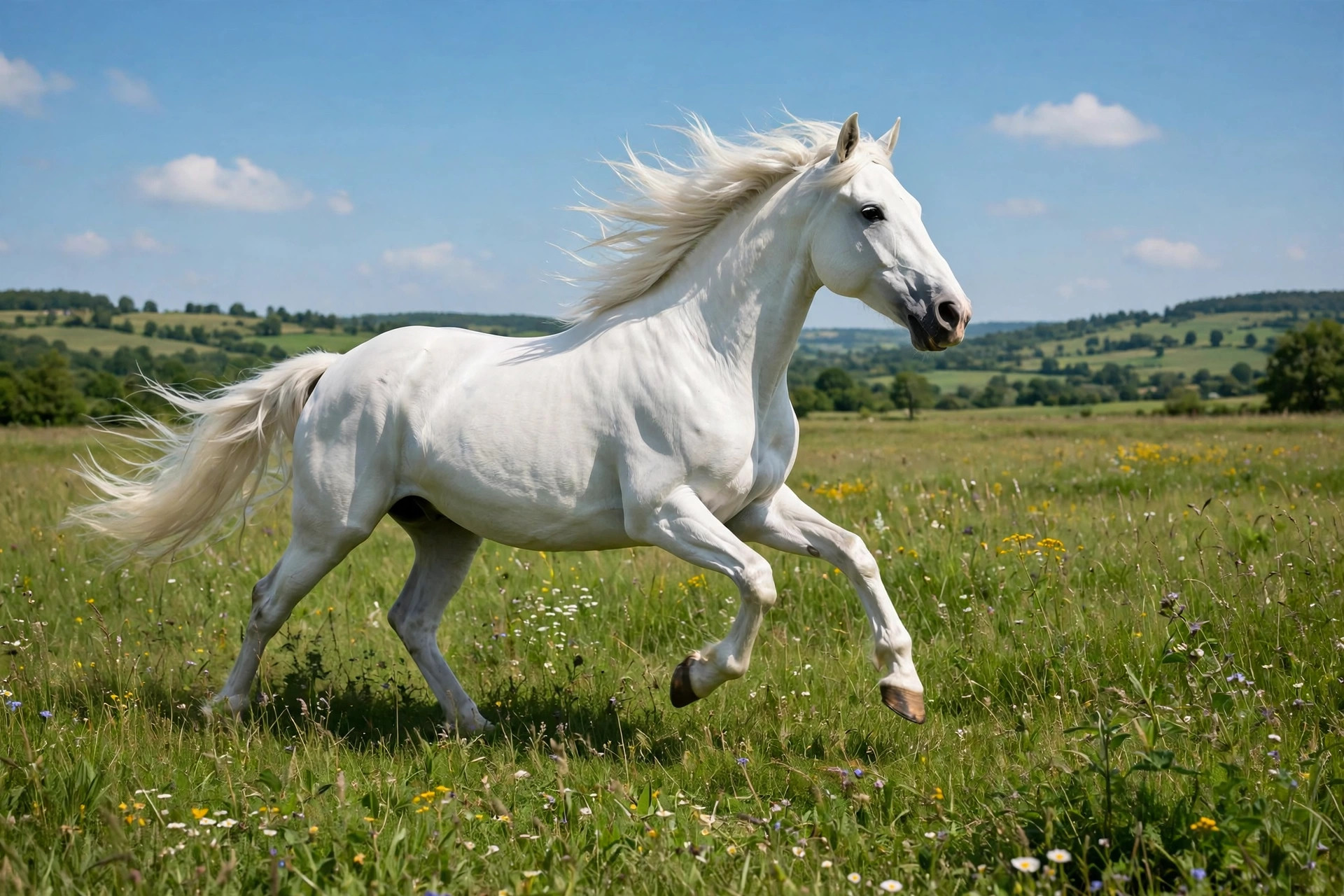
A white horse is the dream most people hope for, and in classical interpretation it is usually read as a good sign. White, in Islamic symbolism, is associated with purity, peace, goodness, and light. A white horse standing calmly, walking gracefully, or carrying you smoothly is generally understood as a sign of honour, a blessing, success in a worthy aim, or relief after a difficulty.
If the white horse comes to you, or you find yourself riding it without fear, that is traditionally read as an even stronger good sign — something good approaching you, or a goal that is closer than you think. For someone who has been praying for a particular outcome — a marriage, a job, a recovery, a reconciliation — a white horse can feel like encouragement to keep going and to keep trusting Allah.
But the white horse is not a promise. A white horse that is injured, frightened, or running away does not carry the same reading. The colour alone does not fix the meaning; the condition of the horse and your feeling in the dream matter just as much. If you saw a white horse and felt peace in the dream, take that peace seriously. It may be the most honest part of the dream.
For an unmarried person, a white horse is sometimes read as a sign of a good and honourable marriage proposal or a righteous partner. For a married person, it may point to peace in the home or an honour coming to the family. For a student, it may point to success in studies. These are traditional associations, not guarantees — and they only make sense if they fit the dreamer’s actual life.
Seeing a Black Horse in a Dream
A black horse makes people nervous, and that nervousness is understandable — but it is not always justified. In classical interpretation, a black horse is a more serious symbol than a white one, but it is not automatically a bad omen.
A strong, beautiful, well-kept black horse is generally associated with power, authority, and a significant position. It can point to a person of influence entering your life, a major responsibility, or a goal that requires real strength. Some classical interpreters linked a black horse with leadership and high standing, because a black horse was a striking, commanding animal.
The more difficult reading comes when the black horse is wild, aggressive, or frightening, or when you feel fear in the dream. In that case, classical scholars generally associate it with a powerful difficulty, a serious challenge, or a sorrow that needs patience. It can also reflect a powerful emotion in the dreamer — anger, grief, ambition — that feels too big to control.
The key question to ask yourself is simple: how did the horse behave, and how did you feel? A black horse you ride with confidence is a very different dream from a black horse that is chasing you through the dark. Do not let the colour alone frighten you. Look at the whole picture.
Seeing a Brown Horse in a Dream
A brown horse is the most ordinary-looking horse, and its meaning in dreams is correspondingly grounded and practical. Classical scholars generally associate a brown horse with steady work, lawful earnings, travel, and the practical side of life — the things that do not look dramatic but keep a household running.
If you dream of a healthy brown horse, especially one that is working, walking steadily, or carrying a load without trouble, it is traditionally read as a sign of stable provision: your efforts are bearing fruit, or they will, if you keep at them. For a businessperson, it may point to steady trade rather than a sudden windfall. For an employee, it may point to recognition for consistent work. For a student, it may point to progress through steady study rather than a single brilliant result.
A brown horse that is tired, thin, or struggling may be a gentle warning about overwork, or about a source of income that needs attention. It is rarely read as a disaster — more as a nudge to look after your health, your work, or your finances before a small problem becomes a big one.
If the brown horse in your dream had a particular shade — a rich reddish-brown, a dark bay, a light chestnut — do not over-read the exact shade. The classical books do not give a reliable separate meaning for every shade of brown, and anyone who tells you otherwise is guessing. The horse’s health, behaviour, and your feeling in the dream are far more informative.
Riding a Horse in a Dream
Riding a horse is one of the most common horse dreams, and it is also one of the most positive in classical interpretation — provided the ride goes well.
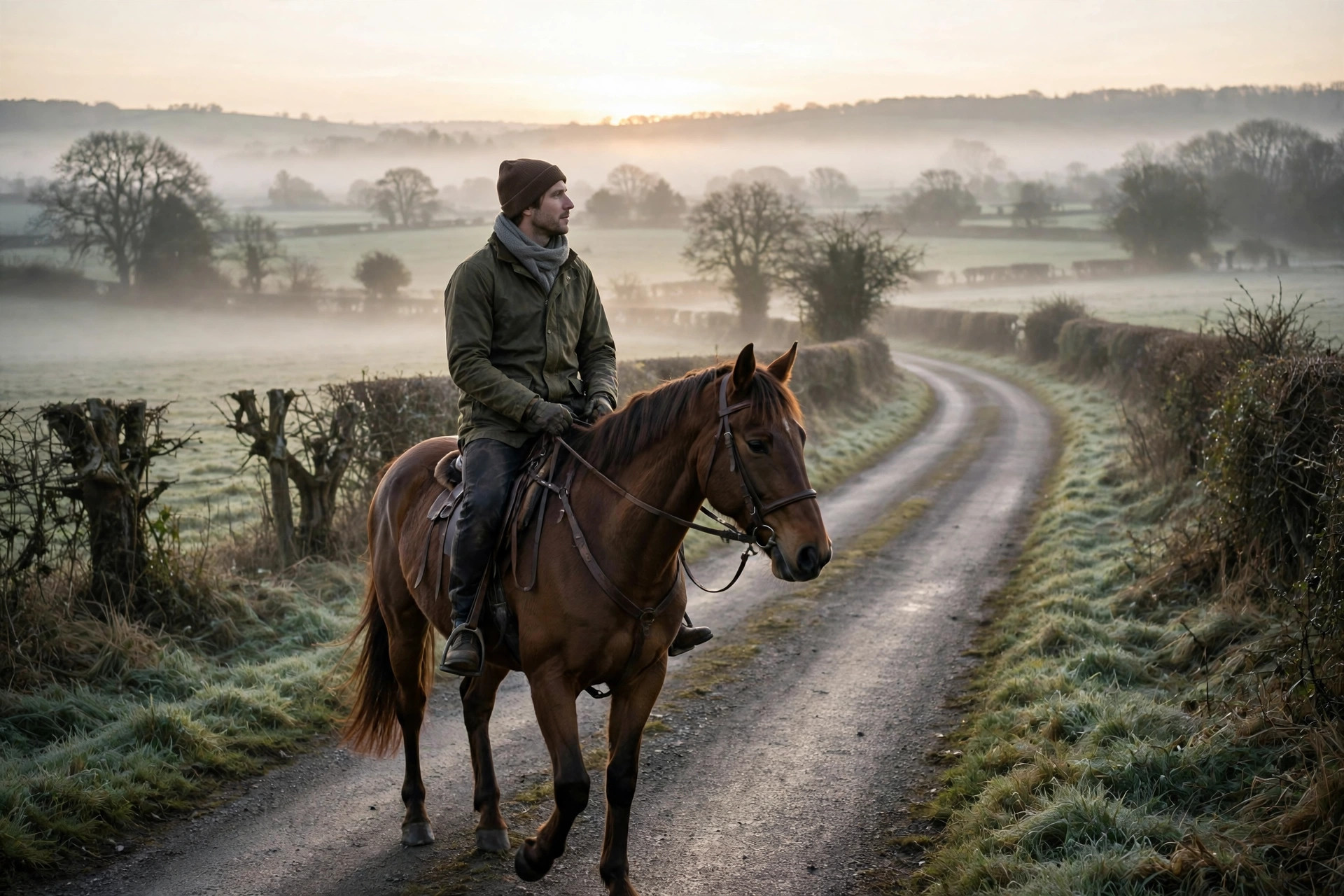
Riding a horse confidently, in control, moving in the direction you want to go: this is generally read as a sign of authority, success, and honour. It can point to a new responsibility you will handle well, a journey that will go smoothly, a promotion, or a goal you are finally making real progress on. The horse carries you; you guide it. That balance — strength under direction — is the heart of the symbol.
Riding a horse with a saddle and proper equipment is traditionally read as an even better sign, suggesting that your affairs are properly prepared and that you have what you need for the task ahead. Riding bareback, while still positive if the ride is smooth, can suggest that you are managing through courage and ability even without ideal support.
Riding fast and feeling joy or freedom in the dream often reflects ambition and confidence in waking life. You may be someone who is ready for a bigger challenge, and the dream is showing you that readiness. Riding slowly and calmly can point to dignity, patience, and a steady rise rather than a sudden leap.
If you were riding but felt afraid, lost, or unable to steer, the meaning shifts. That is not a dream about success; it is a dream about a responsibility or a situation that feels bigger than your current control. It does not mean you will fail. It means you should pause and ask: what in my life right now feels like a horse I cannot steer? The answer to that question is usually more useful than any symbol dictionary.
For an unmarried person, riding a horse is sometimes traditionally read as a sign of an honourable marriage or a respected position in the community. For a married person, it may point to leadership in the family or success in a shared project. Again, these are associations, not promises — and they should be weighed against the dreamer’s real circumstances.
A Horse Running in a Dream
A horse running is a vivid image, and its meaning depends almost entirely on how it runs.
A horse running freely across an open field, strong and joyful, is generally read as a good sign: freedom, energy, progress, and the release of something that was held back. It can reflect a period of your life opening up — a difficulty passing, a plan moving forward, an opportunity arriving. If you watched the running horse with happiness, that happiness is part of the meaning.
A horse running towards you can feel frightening, but it is not necessarily a bad sign. It may represent an opportunity, a piece of news, or a change that is coming towards you quickly. Whether it is good or difficult depends on what follows in the dream: does the horse stop peacefully, does it pass by, or does it knock you down?
A horse running away from you is the version that most often carries a warning. Classical interpreters generally associate a horse running away with a lost opportunity, a blessing slipping away through neglect, or a goal that needs attention before it is too far gone. It can also reflect a feeling of helplessness — watching something you value move out of reach. If this was your dream, it is worth asking, gently and honestly: is there something in my life I have been neglecting? A relationship, a prayer, a project, a promise? The dream may be less about the future than about the present.
A Horse Chasing You in a Dream
Being chased in a dream is frightening, and being chased by a horse — a large, powerful animal — is especially so. Most people wake up from this dream with their heart racing. The first thing to do is to breathe, and to remember that a frightening dream is not a prediction.
In classical interpretation, a horse chasing you is generally associated with a powerful force in your life that you feel you cannot face: a debt, a decision, a person in authority, a fear about the future, or a responsibility you have been avoiding. The horse is not necessarily an enemy. It may be something that needs your attention, and your running is the avoidance.
If the horse catches you, the classical reading is not necessarily worse. Some interpreters read being caught as the situation finally demanding to be faced — and facing it may be the beginning of resolving it. If you escape, it may reflect that you will get through the pressure, but that the underlying issue still needs attention.
There is also a simpler, human reading that is worth considering: sometimes a chase dream is your mind processing stress. If you are under real pressure at work, in your studies, or in your family, your sleeping mind may turn that pressure into a horse. That does not make the dream meaningless — it makes it honest. The practical response is the same either way: look at what is chasing you in waking life, and deal with one piece of it.
If chase dreams repeat night after night, that is worth taking seriously as a sign of ongoing stress or anxiety, not as a supernatural message. Talk to someone you trust, look at your workload and your sleep, and if the anxiety persists, consider speaking to a doctor or counsellor. Islam encourages seeking help for real difficulties; a repeated frightening dream can be a prompt to do that.
A Wounded or Dead Horse in a Dream
This is the hardest horse dream to wake up from, and it deserves a careful, honest answer.
A wounded horse in a dream is generally read in classical literature as a sign of a setback: a loss of strength, a damaged reputation, a business difficulty, a broken promise, or a relationship under strain. The wound is the key: where is it, how bad is it, and is anyone tending to it? A horse that is wounded but being cared for carries a different feeling from a horse left alone and suffering. The first suggests a difficulty that can be healed with attention; the second suggests neglect.
A dead horse is traditionally read as a more serious sign: the end of a source of strength or provision, the loss of an opportunity, or the closing of a chapter. For a businessperson, classical interpreters sometimes linked it with a significant financial loss. For others, it could point to the end of a relationship, a job, or a long-held plan.
But here is what must be said clearly: a dead horse in a dream does not mean someone will die, and it does not mean your future is ruined. Dreams speak in symbols, not in literal headlines. The end of one thing in a dream can also be the clearing of space for something else. And a single dream, however vivid, is not a verdict. If you are worried after such a dream, the Islamic response is not panic. It is prayer, charity, and practical care for the things that matter — your health, your family, your livelihood, your relationship with Allah. Do those things, and you have responded to the dream in the best possible way.
If you recently lost someone or something in real life, a wounded or dead horse may also be your grief speaking in symbols. That is normal, and it deserves compassion, not fear.
A Horse in Your House in a Dream
A horse inside a house is an unusual image, because horses belong outside — in a field, a stable, a courtyard. When a horse appears inside the home in a dream, classical interpreters paid attention, because the home in dreams usually stands for the family, the household, and private life.
A calm, beautiful horse standing peacefully in your house is generally read as a good sign for the household: honour coming to the family, a blessed guest, good news, or provision entering the home. Some classical interpreters linked a horse entering the house with a marriage, a birth, or an honoured visitor. If the horse is well cared for in the dream, the reading is stronger.
A horse that is restless, destructive, or frightened inside the house carries a different meaning: tension in the family, a disagreement, a guest or a situation that is disrupting the peace of the home, or a powerful emotion that has entered private life and needs handling with wisdom.
If the horse was in a specific room — the courtyard, the bedroom, the kitchen — do not over-read the room. The classical books do not give a reliable separate meaning for every room, and the overall feeling of the dream matters more. Ask instead: was the horse welcome in the house, or was it out of place? Was it calm, or was it causing damage? Was I happy to see it, or afraid? Your answers to those questions will tell you more than any list.
Buying or Receiving a Horse in a Dream
Buying a horse in a dream is generally read as a positive and practical sign. In classical interpretation, buying something valuable with your own effort points to acquiring honour, taking on a worthwhile responsibility, or investing in something that will bring benefit. Buying a healthy, beautiful horse suggests a good decision: a new venture, a marriage, a home, a skill, or a position that will serve you well.
Receiving a horse as a gift is traditionally read as an even better sign, because a gift in a dream often points to a blessing that comes without your striving — an honour, a provision, or a kindness from someone, or from Allah, that you did not earn by effort alone. If the person who gave you the horse is someone you know and respect, classical interpreters sometimes read that as a sign of benefit coming through that person.
The price matters in the dream, in a general way: paying a fair price for a good horse is a better sign than overpaying for a poor one, or receiving a sick horse as a gift. And if you bought the horse and then lost it, or it was taken from you, the reading shifts towards a gain that may not last, or a decision that needs more care. As always, the whole story of the dream matters more than any single moment.
For a businessperson, buying a horse may point to a good investment or a new partnership. For a student, it may point to acquiring knowledge or a skill that will carry them forward. For someone looking for marriage, it may point to finding a suitable, honourable partner. These are traditional associations, offered as possibilities to reflect on — not as certainties.
Falling Off a Horse in a Dream
Falling off a horse is a frightening moment in a dream, and it is one of the most commonly reported horse dreams. In classical interpretation, it is generally read as a sign of losing a position, a setback, or a loss of control — not necessarily a disaster, but a real stumble.
If you fall but get up unhurt, the traditional reading is more hopeful: a setback you will recover from, a mistake you will learn from, or a difficulty that will pass. If you fall and are injured, or you cannot get back on, it may point to a bigger difficulty — a loss of honour, a broken commitment, or a plan that needs to be rethought rather than pushed forward.
The manner of the fall matters too. Being thrown by a wild horse suggests a situation that overpowered you. Slipping off because you were careless suggests a mistake that was avoidable — and therefore fixable. Falling in front of people can point to embarrassment or a public setback, while falling alone may point to a private struggle.
Whatever the details, the practical response to a falling dream is not fear but review. Ask yourself: where in my life am I moving too fast, or holding on too loosely? Is there a commitment I have taken on that I am not ready for? Is there a habit — in spending, in speech, in work — that could cause a fall if I do not correct it? A dream that shows you falling can be a kindness if it helps you steady yourself before a real fall happens.
A Horse in a Race in a Dream
A horse in a race brings the themes of competition, ambition, and timing into the dream. Classical interpreters generally read a racehorse as a symbol of striving — for a goal, a position, a livelihood, or recognition.
If your horse is leading the race, or wins it, that is traditionally read as a good sign: success in a competition, victory over a rival or a difficulty, or a goal achieved through effort. It can be especially encouraging for a student facing an exam, a businessperson facing competition, or anyone working towards a specific target.
If your horse is falling behind, refusing to run, or losing the race, the reading is more cautious: a goal that needs more effort, a competition you may not win in the way you hoped, or a reminder that not every race is worth running. Sometimes the wisest response to a losing race in a dream is to ask whether you are competing in the right race at all. Ambition is good, but it needs direction.
Watching a race without riding — as a spectator — is a different dream. It may reflect that you are watching others compete, comparing yourself to them, or waiting for an outcome that depends on others. If that was your dream, it may be worth asking whether you are spending too much time watching other people’s races and too little time running your own.
A Horse in Water in a Dream
Water in dreams has its own rich symbolism in Islamic interpretation — it is generally associated with life, knowledge, purity, and sometimes with trials — and a horse in water combines the two symbols.
A horse standing or walking calmly in clear, clean water is generally read as a good sign: purity, relief, a difficulty being washed away, or knowledge and clarity coming into your life. A horse drinking clean water can point to satisfaction, provision, and contentment.
A horse struggling in deep, dark, or dirty water carries a more difficult reading: a trial, a confusing situation, or an emotional difficulty that feels overwhelming. A horse drowning is a distressing image, and classical interpreters generally read it as a sign of a serious difficulty or a loss. As with the dead horse, this should not be read literally as a prediction of death. It is a symbol of being overwhelmed, and the response is the same: prayer, practical help, and care for yourself and those around you.
A horse crossing a river or a stream successfully is traditionally read as a hopeful sign: getting through a difficulty, moving from one stage of life to another, or completing a journey that seemed hard. If you were riding the horse across the water, the reading is stronger — you are not just surviving the crossing, you are directing it.
What the Dream May Mean for Different People
The same horse can mean different things depending on who is dreaming. This is one of the oldest principles of Islamic dream interpretation, and it is also common sense. A dream speaks to the dreamer’s life. Here is how the general themes are traditionally applied — always as possibilities, never as fixed verdicts.
For an unmarried person: A horse, especially a beautiful, healthy, or white one, is often read as a sign relating to marriage: an honourable proposal, a righteous partner, or a marriage that brings dignity to the family. Riding a horse confidently can point to readiness for marriage and for the responsibilities that come with it. A wild or uncontrollable horse may reflect anxiety about marriage, or a warning to choose a partner with care and to seek Allah’s guidance through istikhara before deciding.
For a married person: A horse in the dream often relates to the household: honour for the family, provision, a child, or a shared project. A calm horse in the house may point to peace and blessing in the marriage. A restless or wounded horse may point to tension that needs honest conversation and patience. Buying a horse may point to a joint decision — a home, a business, a move — that will benefit the family.
For a student: A horse often stands for knowledge, progress, and the journey of learning. Riding well can point to success in exams or in a chosen field. A running horse can reflect ambition and energy. A horse that will not move may reflect feeling stuck in studies, or a subject that needs a different approach. The practical advice is the same in every case: keep studying, ask for help where you need it, and trust the process.
For a businessperson: A horse is closely tied to trade, provision, and reputation. A strong horse can point to a thriving business or a good deal. A sick or lost horse may point to a business risk that needs attention — a debt, a partnership, a market change. A horse in a race may reflect competition directly. The dream is not a business forecast. It is a prompt to review your affairs with care: check your accounts, honour your commitments, deal honestly with people, and do not take a risk you cannot afford.
For someone who is ill, or caring for someone who is ill: A healthy, calm horse can be a comforting image — strength, recovery, hope. A weak or suffering horse may reflect the worry and exhaustion of illness itself. In this situation, the dream is best treated as an emotional reflection, not a medical sign. Seek proper medical care, pray for healing, and accept help from others. Do not let a dream add fear to an already difficult time.
For someone who has been praying for something specific: A horse dream after istikhara or after a period of prayer is often felt as an answer, and it may be — but it should be read with care. A calm, clear, good dream after istikhara is traditionally taken as encouragement. A confused or frightening dream after istikhara is not necessarily a “no”; it may simply reflect your own anxiety. Istikhara is a prayer for guidance, and its answer often comes through events and the settling of the heart over time, not through a single dream alone.
Practical Guidance: What to Do After Such a Dream
A dream is only useful if it leads to something good in waking life. Here is a simple, honest guide to responding to a horse dream — or any dream — in the Islamic way.
If the dream was good: Thank Allah. A good dream is a blessing, and gratitude is the right response. You can share it with someone you love and trust, if you wish. Then let it encourage you: keep doing the good work you are doing, keep your intentions sincere, and do not become complacent. A good dream is not a guarantee of success; it is encouragement to keep striving.
If the dream was worrying: Do not panic, and do not spread the dream around. The Prophet Muhammad (peace be upon him) taught that when a person sees a dream they dislike, they should seek refuge in Allah from Shaytan, spit lightly to the left three times, and not tell others about it. You can also get up, pray two rak’ahs if you wish, and ask Allah for protection and clarity. Then go back to sleep, or start your day, and do not let the dream rule your mood. A worrying dream is not a sentence. It is a prompt to be careful, to pray, and to do good.
Give charity. Sadaqah is a simple, powerful response to any dream that leaves you uneasy. It does not need to be large. A small amount given sincerely, for the sake of Allah, is a practical way of turning worry into good action. Classical scholars often advised charity after a disturbing dream, not because charity “cancels” a dream, but because it puts the dreamer back in the position of doing good rather than sitting in fear.
Reflect, don’t obsess. Ask yourself once, calmly: is there something in my life this dream might be pointing to? A decision I need to make, a relationship I need to mend, a habit I need to change, a risk I need to reconsider? If an answer comes, act on it in a practical way. If no answer comes, let the dream go. Going over a dream again and again, searching for hidden meanings, is not piety — it is anxiety, and it helps no one.
Make istikhara for real decisions. If your horse dream came while you were deciding about a marriage, a job, a move, or a business deal, istikhara is the proper Islamic tool — not the dream alone. Pray istikhara sincerely, then watch how events unfold and how your heart settles. A dream can be part of that process, but it should not replace it.
Keep your daily life in order. The most reliable “interpretation” of any dream is the life you live after it. Pray on time. Be honest in your dealings. Look after your family. Take care of your health. Work with excellence. If a horse dream reminded you of strength and honour, live up to those words in your ordinary day. That is worth more than any symbol dictionary.
Do not chase dream interpreters for every dream. It is fine to ask a knowledgeable, trustworthy person about a dream that truly troubles you. But running to a different interpreter for every dream, or paying someone to tell you your future from your dreams, is not the Islamic way. Most dreams are a mix of your thoughts, your worries, and your hopes — and most of them need no interpretation at all. If a dream stays with you and feels important, reflect on it, pray about it, and move on.
Frequently Asked Questions
1. Is seeing a horse in a dream a good sign in Islam?
Generally, yes. In classical Islamic dream interpretation, a healthy, calm, beautiful horse is usually read as a positive symbol — strength, honour, dignity, lawful provision, and success. But the details matter: the horse’s colour, health, and behaviour, and your feeling in the dream, can change the reading. A wild, wounded, or frightening horse is read more cautiously.
2. What does a white horse mean in a dream?
A white horse is traditionally one of the most positive horse dreams. Classical scholars generally associate it with goodness, purity, peace, honour, and victory. Riding a white horse calmly, or seeing one approach you peacefully, is often read as a sign of a blessing, relief after difficulty, or success in a worthy aim. It is not a guarantee — but it is a hopeful sign.
3. What does a black horse mean in a dream?
A black horse is a serious, powerful symbol, but not automatically a bad one. A strong, well-kept black horse is generally associated with power, authority, and high standing. A wild or frightening black horse, or one that fills you with fear, is more often read as a sign of a serious challenge, a powerful difficulty, or a strong emotion that needs handling with patience.
4. What does it mean to ride a horse in a dream?
Riding a horse well and confidently is generally read as a sign of authority, honour, success, and progress — a responsibility you will handle well, a journey that will go smoothly, or a goal moving forward. Riding without control, or feeling afraid while riding, suggests a situation in your life that feels bigger than your current control, and is a prompt to slow down and review your plans.
5. What does it mean if a horse is chasing me in a dream?
Being chased by a horse usually reflects pressure or avoidance in waking life — a decision, a debt, a responsibility, or a fear you have been putting off. The horse represents the thing that feels too big to face. The Islamic response is not fear but action: identify what is chasing you in real life, take one practical step towards it, pray, and seek help if you need it.
6. What does a dead horse mean in a dream?
A dead horse is traditionally read as a sign of the end of a source of strength or provision — a lost opportunity, a closed chapter, or a significant setback. It does not mean someone will die, and it is not a prediction of ruin. Treat it as a prompt to review your affairs, pray, give charity, and take practical care of your health, family, and livelihood.
7. I dreamt of a horse in my house. What does that mean?
A calm, beautiful horse in your house is generally read as a good sign for the household — honour, good news, provision, or a blessed visitor coming to the family. A restless or destructive horse in the house may point to tension in the family or a disruption to the peace of the home that needs wisdom and patience to resolve.
8. Does dreaming of a horse mean I will get married soon?
Not necessarily. For an unmarried person, a beautiful or white horse is traditionally associated with an honourable marriage or a righteous partner, and riding a horse is sometimes read in the same way. But a dream is not a promise or a timetable. If you are hoping for marriage, the practical steps matter more: keep your character, pray istikhara when a real proposal comes, and consult your family and those you trust.
9. What should I do if I see a bad dream about a horse?
Seek refuge in Allah from Shaytan, do not dwell on the dream, and do not tell everyone about it. You may pray two rak’ahs, give a little charity, and then carry on with your day. Do not let a bad dream make you afraid to act, to travel, or to make normal decisions. If frightening dreams repeat often, consider whether stress or anxiety is playing a role, and seek support.
10. Can a horse dream be a message from Allah?
A true, clear, good dream can be a glad tiding from Allah — the Islamic tradition accepts this. But not every dream is such a message, and even a good dream should not be treated as a certain prediction. The scholars advise humility here: be grateful for a good dream, be cautious after a worrying one, and judge your life by your actions and your relationship with Allah, not by a single night’s dream.
11. Does the colour of the horse change the meaning?
Yes, in a general way. White is generally linked with goodness and peace, black with power and seriousness, brown with steady work and provision. But colour is only one part of the picture. A white horse that is wounded is not a purely good sign, and a black horse ridden with confidence is not a bad one. Always read the colour together with the horse’s condition, its behaviour, and how you felt.
12. I keep dreaming about horses. What does that mean?
Repeated horse dreams usually mean that the theme the horse represents — strength, freedom, ambition, control, or a big decision — is active in your life right now. Your mind may be returning to it because it matters to you. Rather than looking for a new meaning each night, ask what has stayed the same in your life across those nights: a goal, a worry, a hope. Address that, and the dreams often settle on their own.
A Final Word
A horse is a noble animal, and it is fitting that it appears in dreams as a symbol of strength, honour, and the journey of life. If you dreamt of a horse, you dreamt of something that has carried people — literally and symbolically — for thousands of years. That is worth sitting with for a moment.
But a dream is a beginning, not an ending. The best response to a good horse dream is gratitude and steady effort. The best response to a worrying one is prayer, charity, and practical care. In both cases, the dream points you back to the same place: your life, your choices, and your relationship with Allah.
May Allah grant you good dreams, protect you from disturbing ones, and bless you with the strength, honour, and provision that the horse has always symbolised — in your dreams and in your waking life. Ameen.
Disclaimer: Dream interpretation in Islam is guidance, not certainty. The meanings discussed in this article are based on general themes from classical Islamic dream literature and on common traditional associations; they are not fixed predictions, and interpretations vary between scholars and between dreamers. The same dream can mean different things depending on the dreamer’s life, circumstances, feelings in the dream, and the full details of what was seen. No interpretation in this article should be taken as a certain statement about your future, your health, your marriage, or your livelihood. If a dream troubles you, pray, give charity, and speak to a knowledgeable and trustworthy person. For important life decisions, use istikhara and consult people you trust — do not rely on a dream alone.
