There are dreams you forget before breakfast, and then there are dreams that stay with you all day. Seeing the Kaaba in a dream is almost always the second kind. You wake up with your heart still beating a little faster, the image still clear in your mind, and one question repeating itself: what did that mean?
For a Muslim, the Kaaba is not just a building. It is the qibla, the direction we turn to five times a day in prayer, no matter where in the world we are. It is the centre of Hajj and Umrah, the place millions of hearts long to visit at least once in their lives. So when it appears in a dream, it feels personal in a way few other dream symbols do. It touches faith, hope, longing, and sometimes guilt or a quiet wish to come closer to Allah.
This article walks through the most common ways the Kaaba appears in dreams, what each one is generally understood to mean in Islamic dream interpretation, and how to think about your own dream calmly and honestly. Nothing here is a prediction about your future. A dream is a sign to reflect on, not a guarantee. But if you have seen the Kaaba in your sleep, it is worth sitting with the dream for a while, because it often says something true about where your heart is right now.
Before we go into the details, it helps to remember one simple fact. The Quran tells us that the first House established for mankind was at Bakkah, blessed and a guidance for the worlds, in Quran 3:96. That verse alone tells you why the Kaaba carries so much weight in a dream. It is linked in the Quran itself with blessing and guidance. When it shows up while you sleep, most classical interpreters read that as a hopeful, positive sign, even when the dream itself feels emotional or confusing.
Quick Answer / Short Meaning
In short, seeing the Kaaba in a dream is generally read in Islamic dream literature as a blessed and hopeful sign. It is often linked with guidance, closeness to Allah, sincerity in faith, hope of pilgrimage, and repentance. Many people who dream of the Kaaba are going through a period of longing, either a longing to visit Makkah, a longing to put their life in order, or a longing to feel close to Allah again after drifting away.
That does not mean every Kaaba dream means the same thing. The details matter a great deal. Standing far away and looking at the Kaaba feels different from standing right in front of it, touching it, or praying beside it. Crying in front of it carries a different feeling from walking around it in Tawaf. A dream in which the Kaaba is bright and peaceful usually feels reassuring. A dream in which it looks damaged or far away usually leaves a person uneasy, and that unease itself is part of the message.
So the short answer is this: a dream of the Kaaba is usually a good sign, a nudge toward faith, prayer, and hope. The longer answer, which is the rest of this article, depends on what exactly you saw and did in the dream, and on what is happening in your own life at the moment. Read the section that matches your dream most closely, and then read the practical reflection at the end, because that is where a dream turns into something useful in waking life.
Seeing the Kaaba From Afar
One of the most common versions of this dream is also one of the simplest. You are standing at a distance, perhaps on a hill or in a crowded street, and you can see the Kaaba far away. It is small in the distance, but you know exactly what it is. You feel drawn to it, and you may start walking toward it, or you may simply stand there looking.
In classical dream interpretation, distance often stands for longing. Seeing the Kaaba from afar can mean that your heart is turned toward Allah and toward pilgrimage, but that you feel you are not there yet, either literally or spiritually. It is the dream of someone who wants to be closer, who wants to visit Makkah one day, or who wants their prayers and their daily life to feel more connected than they do right now.
This kind of dream is common among people who have never been to Makkah, and also among people who have been but miss it deeply. It is also common at times when life feels busy or scattered, when prayer has become rushed, or when a person has been thinking about Hajj or Umrah but does not know when it will be possible. The dream does not promise a date or a ticket. It reflects the longing itself, and longing for something good is itself a good sign.
If you had this dream, take it gently. It may be an invitation to keep that longing alive in a practical way. Learn a little more about Umrah, save a small amount regularly if you can, make dua for the chance to visit, and in the meantime, bring a little of that closeness into your daily prayers. The distance in the dream does not mean Allah is far from you. It often means your heart knows where it wants to go.
Standing Right Before the Kaaba
Standing right in front of the Kaaba in a dream is a powerful image. There is no distance left. You are close enough to see the black cloth, the gold band, the details you have only seen in photos or videos. Many people describe this dream as feeling real, almost more real than waking life, and they wake up wishing it had lasted longer.
This scenario is generally read as a sign of closeness, honour, and answered longing. In the tradition of Ibn Sirin and other classical interpreters, being close to the Kaaba in a dream is linked with closeness to Allah, with sincerity, and with hope that a heartfelt dua will be answered. It can also be read as a sign that a person is on the right path, or is being guided back to it after a difficult time.
For some people, this dream comes at a moment of decision. They have been praying about something, perhaps a marriage, a job, a family matter, or forgiveness for a past mistake, and then they dream of standing before the Kaaba. They wake up feeling calm, as if they have been heard. That calm feeling matters. Dreams are not only about symbols; the feeling you carry out of the dream is part of its meaning too.
If this was your dream, thank Allah for it and let it encourage you. Keep praying with the same sincerity you felt in the dream. You do not need to chase the dream or try to dream it again. The point of a good dream is not to hold on to the sleep, but to carry its peace into your waking prayers and choices.
Touching or Kissing the Black Stone
The Black Stone, set in the eastern corner of the Kaaba, holds a special place in the hearts of Muslims. In waking life, touching or kissing it during Tawaf is something many pilgrims hope for, even though the crowds often make it impossible. So when it appears in a dream, it feels especially intimate and blessed.
Dreaming of touching the Black Stone, or of kissing it, is generally read as a sign of deep sincerity, love for the faith, and a strong connection to the Sunnah and to the act of worship itself. It can suggest that a person longs not just to visit Makkah, but to worship in the most heartfelt way possible, to feel close to the Prophet’s way of worship, and to be among those whose efforts are accepted.
Some interpreters also link this dream with the hope of a wish being fulfilled, or with the acceptance of repentance. A person who has been carrying guilt, or who has recently turned back to prayer after a long gap, may dream of reaching out and touching the Black Stone as a picture of that return. The hand reaching out in the dream can mirror the heart reaching out in waking life.
It is worth saying plainly that dreaming of this does not mean you have earned a special status, and it does not guarantee that a particular wish will come true in a particular way. It is a hopeful sign, not a contract. But it is a beautiful sign to receive. If you dreamed of touching or kissing the Black Stone, let it remind you that Allah sees the effort of a sincere heart, even when no one else does, and that turning back to Him is always possible.
Praying Near or Inside the Haram
Many people dream not just of seeing the Kaaba, but of praying near it. You might be standing in the courtyard of the Haram, joining rows of worshippers, or praying quietly on your own with the Kaaba in front of you. Some dream of praying inside the Haram itself, in that vast, peaceful space where the sound of the adhan and the sight of thousands praying together creates a feeling that is hard to describe.
Prayer in a dream is itself a meaningful symbol, and prayer near the Kaaba adds another layer to it. In general, dreaming of praying is read as a sign of faith, humility, and a heart that wants to be in conversation with Allah. Praying near the Kaaba can suggest that your prayers are sincere, that you are seeking guidance, or that you are in need of comfort and are turning to the right place for it.
This dream often comes during difficult times. A person worried about a sick parent, a financial problem, a marriage, or a child may dream of praying in the Haram and wake up feeling lighter, as if a weight has been shared. Others dream of it when they feel spiritually dry, as if their prayers at home have become routine and they are longing for the feeling of prayer to return. The dream can be a reminder that prayer is not only an obligation, but a place of rest.
If you dreamed of praying near the Kaaba, try to hold on to the feeling of that prayer. Pray your next salah slowly, without rushing, and make a short, honest dua afterwards in your own words. You do not need fancy language. The same sincerity you felt in the dream is available in your own room, at your own prayer mat, right now.
Circumambulating (Tawaf) Around the Kaaba
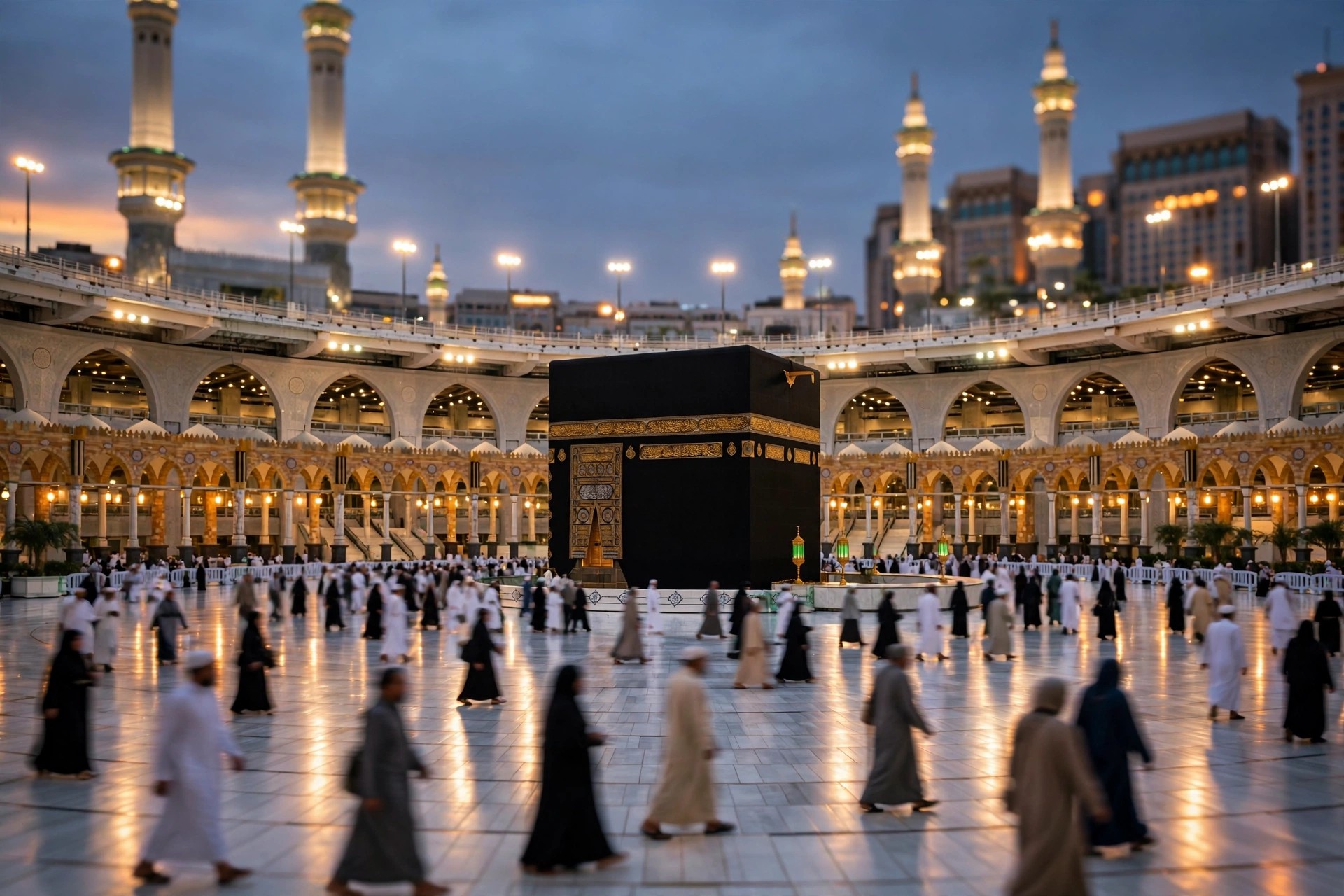
Dreaming of doing Tawaf, walking around the Kaaba with other worshippers, is one of the most complete and moving versions of this dream. You are not just looking at the Kaaba or standing still before it. You are moving with it, part of a circle of people all turning toward the same centre, all saying the same words of praise and prayer.
In Islamic dream interpretation, Tawaf in a dream is often read as a sign of devotion, unity, and a life that is beginning to revolve around Allah in a healthier way. It can suggest that a person is finding their centre again after a period of confusion or distraction. Just as the pilgrims in Tawaf move in an orderly circle, the dreamer may be finding order, purpose, and direction in waking life.
For many people, this dream also carries a hope of pilgrimage itself. It is natural to dream of doing Tawaf if you have been thinking about Hajj or Umrah, watching videos of Makkah, or listening to someone describe their own journey. The dream may simply be your heart rehearsing something it deeply wants to do. That is not a small thing. The desire to perform Hajj or Umrah, and the intention behind it, are valued in Islam even before the journey itself becomes possible.
Pay attention to how the Tawaf felt in your dream. Was it peaceful and unhurried? Were you able to keep up, or did you feel lost in the crowd? Did you complete the circuits, or did you wake up halfway round? These feelings can reflect how your spiritual life feels at the moment. A calm, complete Tawaf often leaves a feeling of reassurance. A difficult or interrupted Tawaf does not mean your faith is broken; it may simply reflect that you feel stretched or distracted right now, and that you are longing for a steadier rhythm of worship.
Whatever the feeling, the image of Tawaf is a reminder that faith is not a single moment, but a circling back, again and again, to the same centre. If you dreamed of Tawaf, you might ask yourself what in your life needs to circle back to Allah: a prayer you have let slip, a habit you want to change, a relationship you want to repair, or a dua you have stopped making. The dream can be a gentle starting point for that return.
Dreaming of Going for Hajj or Umrah
Sometimes the dream is not only about the Kaaba itself, but about the whole journey. You are packing a bag, saying goodbye to family, boarding a plane, arriving in Makkah, or walking through the streets toward the Haram. You may dream of being with family members, of wearing ihram, or of standing with a group of pilgrims who feel like old friends.
Dreams of going for Hajj or Umrah are among the most hopeful in this whole subject. In classical interpretation, they are often linked with the fulfilment of a religious duty, the hope of forgiveness, and a new beginning. Hajj in particular is associated in Islamic teaching with a fresh start, a return to a state of purity, and a journey that changes a person. Dreaming of that journey can reflect a deep wish for that kind of renewal.
It is very common to have this dream after watching Hajj coverage, hearing a family member talk about their Umrah, or seeing photos of friends who have just returned. It is also common when a person is thinking seriously about saving for the journey, or when they have been told by a doctor or a family member that they should go while they are still healthy enough to manage it. The dream gathers all of those waking thoughts and turns them into a single vivid journey.
If you dreamed of going for Hajj or Umrah, do not treat it as a promise that you will travel on a particular date. Treat it as encouragement. If going is possible for you, start taking practical steps: learn what is required, check the costs honestly, talk to your family, and make a plan, even a slow one. If going is not possible right now, for reasons of health, money, or family responsibility, the dream still matters. The intention and the longing are real, and you can honour them by strengthening the worship you can do where you are, by learning, by praying, and by making dua for the opportunity when the time is right.
Seeing the Kaaba in Your Own Home or Town
A less common but very striking version of this dream is seeing the Kaaba somewhere it does not belong in waking life: in your own living room, in your street, in your town, or on a hill near your home. You know it is the Kaaba, but it is suddenly close and present in your everyday world, not far away in Makkah.
This kind of dream often feels strange and wonderful at the same time. In interpretation, it is usually read as a sign that faith and blessing are entering, or are being invited into, your daily life and your home. The Kaaba coming to you, rather than you going to it, can suggest that guidance, peace, or a good change is close at hand, in the place where you actually live, work, and raise your family.
For some people, this dream comes when they have started a new habit at home: praying together as a family, reading Quran regularly, teaching children about Islam, or making their home a calmer and more honest place. The dream can feel like an affirmation of that effort. For others, it comes as a reminder: the blessings we associate with Makkah, like peace, sincerity, and closeness to Allah, are not locked away in one city. They can be cultivated in an ordinary house, on an ordinary street, by ordinary people.
If you had this dream, think about your home and your daily routine. Is there something you have been wanting to change there? A prayer you want to make regular, a habit you want to leave behind, a conversation you have been avoiding? The Kaaba appearing at home can be read as an invitation to bring your faith into the small, everyday spaces, not only into the grand moments of pilgrimage.
Crying Before the Kaaba
Many people who dream of the Kaaba do not just see it. They cry. They stand before it with tears running down their face, unable to speak, overwhelmed by a feeling they cannot quite name. Some wake up with tears still in their eyes, or with a tightness in their chest that slowly fades as the morning goes on.
Crying in a dream, especially in a holy place, is generally read as a positive sign in Islamic dream interpretation, not a sign of punishment. Tears in such a dream often stand for sincerity, humility, repentance, and relief. They can mean that a person is letting go of something heavy: guilt, grief, fear, or a burden they have been carrying for a long time. The dream becomes a picture of the heart softening and opening up.
This dream is especially common among people who are going through grief, or who have recently lost someone, or who feel they have made mistakes they cannot undo. Standing before the Kaaba and crying can feel like finally being able to say what you could not say in waking life. It can also come after a period of sincere dua, when a person has been asking Allah for forgiveness or for help, and the dream gives them a sense of being heard.
If you cried in your dream, do not be embarrassed by it, and do not treat the tears as a bad omen. In waking life, tears during dua are often a sign of a heart that is alive and honest. After such a dream, it can help to spend a few quiet minutes in prayer or dua, to name what you are carrying, and to ask for what you need. You do not need to have the perfect words. The sincerity of the feeling is what matters, and the dream may have been showing you that your heart is already turning in the right direction.
Seeing the Kaaba’s Golden Door Open
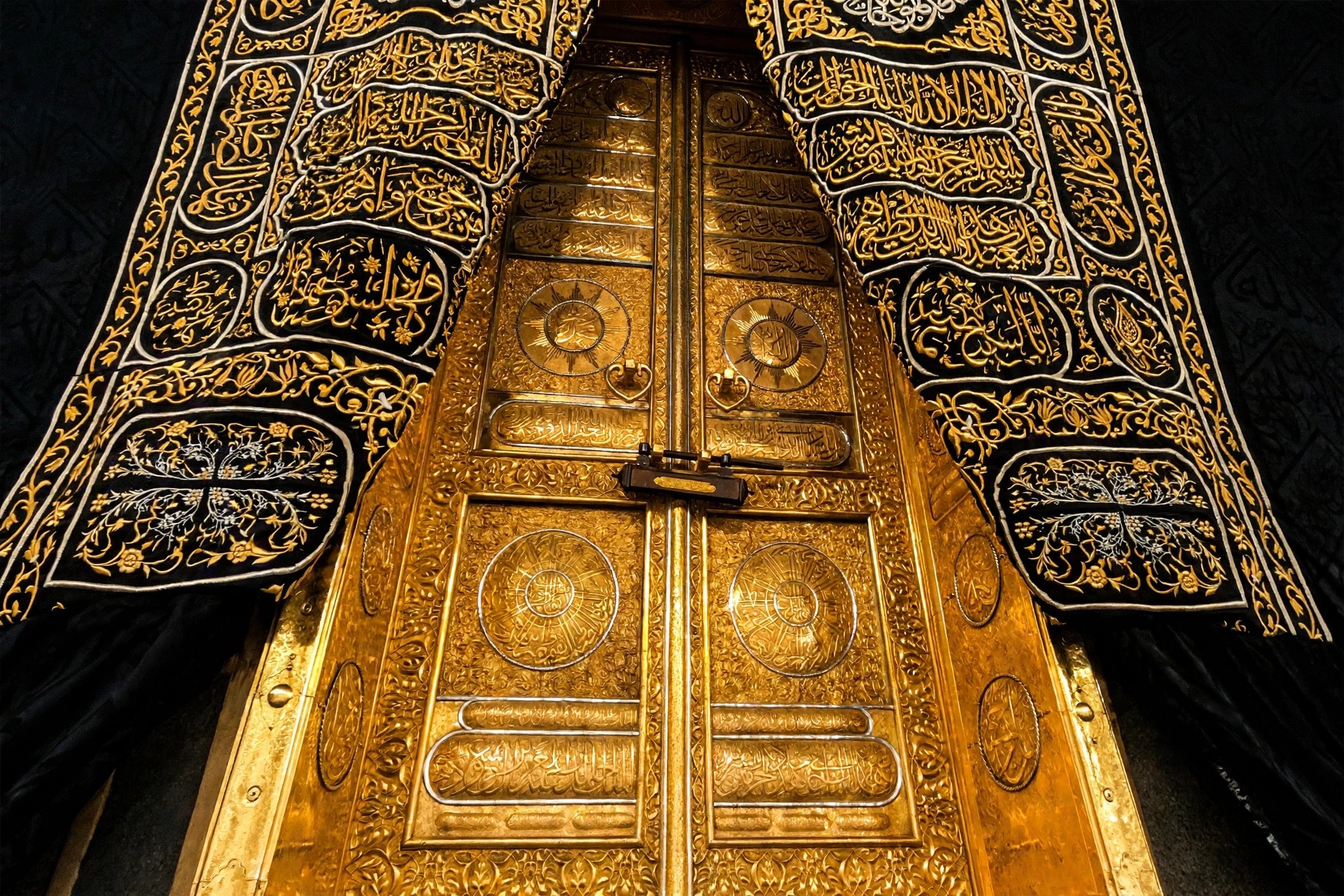
The golden door of the Kaaba, the Bab ar-Rahmah, is a powerful image even in photographs. In a dream, seeing that door open can feel like an invitation. You may dream of standing before it as it opens, of light coming out, or of being invited to step closer or to enter. Some people dream of the door opening for them alone, while others dream of it opening for a crowd.
An open door in dreams is often a symbol of opportunity, acceptance, and welcome. When the door in question is the door of the Kaaba, classical interpreters tend to read it as a particularly hopeful sign: a door of mercy and acceptance opening, a prayer being heard, a path becoming clear after a period of difficulty. It can also suggest that a person is being given a chance to come closer, to repent, to change direction, or to receive something good they have been hoping for.
Of course, an open door can also raise a question. Are you ready to walk through it? A dream of the golden door opening may be less about a future event and more about your own readiness in the present. Is there a good step you have been putting off, a prayer you have been meaning to return to, a wrong you have been meaning to put right, or a habit you have been meaning to start? The open door can be a picture of that opportunity, waiting for you to take it.
If you dreamed of the golden door opening, take it as encouragement, not pressure. You do not need to change everything overnight. But you might choose one small, honest step this week, something that moves you a little closer to the person you want to be. That is often how a hopeful dream bears fruit in waking life: not in a single dramatic moment, but in a quiet, steady step taken while the feeling is still fresh.
Seeing the Kaaba Damaged or in Ruins
This is the dream that worries people the most, and it needs to be handled gently. You dream that the Kaaba is damaged, cracked, falling apart, or in ruins. Perhaps its cloth is torn, its walls are broken, or it looks abandoned and empty. You wake up feeling frightened or sad, and you wonder if it means something terrible is about to happen.
It is important to say this clearly and calmly: a dream of the Kaaba in ruins is not a prediction of doom, and it is not a sign that you are cursed or that disaster is coming. In Islamic dream interpretation, a troubling image is often read as a call to reflect and to turn back, not as a fixed announcement of the future. Dreams are guidance and reflection, not a script of what must happen.
Classical interpreters who discuss difficult dreams of holy places often read them as a reflection of the dreamer’s inner state, or of the state of the community around them. A damaged Kaaba in a dream can point to a feeling that faith has become neglected, that prayer has grown weak, that values have slipped, or that a person feels distant from Allah and unsure how to return. It can also reflect anxiety about the wider Muslim world, about conflict, or about the feeling that something sacred is not being honoured as it should be.
If you had this dream, do not panic and do not try to read a disaster into it. Instead, treat it as a quiet, serious invitation to look at your own life with honesty. Ask yourself simple questions. Has my prayer become rushed or irregular? Is there a habit I know is pulling me away from what is good? Is there a relationship I need to repair, a debt I need to settle, a promise I need to keep? Is there something I have been neglecting that my heart knows about?
The best response to a worrying dream is a practical and hopeful one. Pray, make a sincere dua, give a little charity if you can, and take one small step toward repair. Talk to someone you trust if the dream has left you feeling shaken. And remember that Allah’s mercy is wider than any mistake, and that turning back is always possible. A dream that leaves you uneasy can still be a mercy, if it wakes you up to something you needed to notice.
What Classical Islamic Dream Literature Says in General
Islamic dream interpretation has a long history, and the Kaaba appears in it as one of the most honoured symbols. Writers in the tradition of Ibn Sirin, whose name is closely linked with the classical literature of dream interpretation, generally treat seeing the Kaaba as a blessed, positive sign. In that tradition, the Kaaba is linked with guidance, closeness to Allah, hope of pilgrimage, repentance, and the fulfilment of a righteous wish.
That general reading makes sense when you remember what the Kaaba represents. It is the qibla for every Muslim, the centre of Hajj and Umrah, and the House that the Quran describes in Quran 3:96 as blessed and a guidance for the worlds. A symbol that carries blessing and guidance in the Quran is naturally read as a hopeful sign when it appears in a dream. Classical interpreters were careful, though, to say that meanings vary with the details. A bright, peaceful Kaaba, a person praying calmly beside it, and a person crying sincerely before it would not be read in exactly the same way as a distant, unclear, or damaged image.
Classical literature also places a strong emphasis on the dreamer. The same dream can mean slightly different things for a person who is sincere and prayerful, a person who has drifted away from prayer, a person who is ill, a person who is travelling, or a person who is hoping for a child or a marriage. The interpreter was expected to ask about the person’s life, not just about the dream. That is a useful reminder for us today. Your dream belongs to your life, and its meaning is best understood alongside what you are going through.
It is also worth noting what classical writers did not do. They did not treat every dream as a literal prediction. They did not claim that a good dream guaranteed a particular event, or that a troubling dream made that event inevitable. They treated dreams as one source of reflection among others, to be weighed with prayer, knowledge, and common sense. That balanced approach is still the wisest way to think about a Kaaba dream today.
Finally, classical teaching reminds us that not every dream comes from the same source. Some dreams are simply the mind sorting through the day: a video of Makkah you watched before bed, a conversation about Umrah, a photo you saw online. Those dreams can still be meaningful, because they show what your heart has been dwelling on, but they are not necessarily a message from beyond. Others feel different, clearer and more peaceful, and are traditionally described as good dreams that may carry glad tidings. The honest approach is to hold both possibilities lightly: thank Allah for a good dream, reflect on what it might mean, and do not build your whole life around a single night’s sleep.
What to Do After Dreaming of the Kaaba: Practical Reflection
A beautiful dream can fade quickly if you do nothing with it. A troubling dream can also fade, but it can leave a lingering worry if you do not deal with it. Either way, what you do after the dream matters more than the dream itself. Here are some simple, practical steps that fit with Islamic teaching and with common sense.
First, thank Allah for a good dream, and do not rush to tell everyone about it. It is fine to share a good dream with someone you trust, especially a person of knowledge or a close family member, but you do not need to announce it widely or ask ten different people for ten different interpretations. A good dream is a private gift. Keep its peace, and let it shape your prayers rather than your conversations.
Second, pray. That sounds simple, and it is meant to be. Pray your regular prayers with a little more attention than usual. Make a short dua in your own words after salah, asking for what you need and thanking Allah for what you have. If the dream was about Hajj or Umrah, make a specific dua for the chance to visit, and ask Allah to make a way if it is good for you. If the dream was about repentance, ask for forgiveness sincerely, and then take a practical step to put right what you can.
Third, take one small, concrete step. Dreams often point to something general, like closeness to Allah or a return to prayer, but a general feeling only becomes real when it turns into a specific action. Choose one thing you can do this week: praying one prayer on time without rushing, reading a few verses of Quran daily, giving a small amount in charity, calling a parent, forgiving someone, or letting go of a habit that has been weighing on you. One small step, done sincerely, is worth more than a long list of intentions.
Fourth, if the dream was troubling, do not sit alone with fear. Pray, seek refuge from the worry, and talk to someone wise and calm if you need to. Do not search the internet for the scariest interpretation you can find. A worrying dream is best answered with the same tools as a good dream: prayer, reflection, and a practical step toward what is good. Allah’s mercy is not closed to you because of a dream, and a single night does not decide your future.
Fifth, keep perspective. A dream of the Kaaba is a beautiful thing to experience, but it is not a substitute for daily worship, good character, and honest effort. The people who are closest to Allah are not necessarily the people who have the most vivid dreams. They are the people who pray, who are kind, who keep their promises, and who turn back when they fall short. Let your dream encourage you in those ordinary, daily acts, because that is where faith is actually lived.
Frequently Asked Questions
Is seeing the Kaaba in a dream a good sign in Islam?
In general, yes. Classical Islamic dream literature in the tradition of Ibn Sirin treats seeing the Kaaba as a blessed and hopeful sign, often linked with guidance, closeness to Allah, hope of pilgrimage, and repentance. The Quran describes the House at Bakkah as blessed and a guidance for the worlds in Quran 3:96, which is part of why the symbol carries such a positive meaning. That said, the exact meaning depends on the details of your dream and on your own life. A peaceful dream of standing before the Kaaba is usually read as reassuring, while a troubling dream is usually read as a call to reflect, not as a punishment.
Does dreaming of the Kaaba mean I will go for Hajj or Umrah soon?
Not necessarily, and it is important not to treat the dream as a promise or a timetable. Many people dream of the Kaaba because they long to visit Makkah, and the dream reflects that longing. It can be read as a hopeful sign and as encouragement to make a practical plan if travel is possible for you. But a dream does not guarantee a visa, a flight, or a particular year. The best way to honour the dream is to make dua, to plan honestly if you can, and to strengthen your worship where you are in the meantime.
What does it mean to dream of praying in front of the Kaaba?
Dreaming of praying in front of the Kaaba is generally read as a sign of sincere faith and a heart that is turning to Allah. It can suggest that your prayers are heartfelt, that you are seeking guidance or comfort, or that you are longing for prayer to feel more meaningful than it does right now. Many people have this dream during difficult times, and they wake up feeling calmer. If this was your dream, try to carry that calm into your next prayer, and make a short, honest dua in your own words afterwards.
What does Tawaf around the Kaaba mean in a dream?
Tawaf in a dream is often read as a sign of devotion and of a life finding its centre again. Walking around the Kaaba with other worshippers can suggest unity, order, and a return to Allah after a period of distraction. It is also a natural dream for someone who has been thinking about Hajj or Umrah. Pay attention to how the Tawaf felt: peaceful and complete, or difficult and interrupted. That feeling can reflect how steady or stretched your spiritual life feels at the moment, and it can point to a small step you might take to find a steadier rhythm.
I cried in my dream before the Kaaba. Is that a bad sign?
No, crying before the Kaaba in a dream is generally read as a positive sign, not a bad one. In Islamic dream interpretation, tears in a holy place often stand for sincerity, humility, repentance, and relief. They can mean that you are letting go of guilt, grief, or a heavy burden. Many people have this dream when they are going through a hard time, or after they have been making sincere dua. If you woke up feeling lighter, even a little, that is part of the meaning. Take a few quiet minutes to pray and to name what you are carrying, and ask Allah for what you need.
What does it mean if I saw the Kaaba damaged or in ruins in my dream?
A dream of the Kaaba damaged or in ruins can feel frightening, but it should not be read as a prediction of disaster. In classical interpretation, a troubling image like this is usually understood as a call to reflect and turn back, not as a fixed announcement of the future. It may reflect a feeling that faith or prayer has become neglected, or anxiety about the state of the Muslim world, or a personal sense of distance from Allah. The helpful response is practical and hopeful: pray, make sincere dua, take one small step toward repair, and talk to someone you trust if you feel shaken. Allah’s mercy is wider than any mistake, and turning back is always possible.
Should I tell other people about my dream of the Kaaba?
You can share a good dream with someone you trust, especially a person of knowledge or a close family member, but there is no need to tell everyone or to collect many different interpretations. Islamic teaching encourages a person to be selective about sharing dreams, and to share a good dream with people who will receive it well. Avoid asking strangers online for a dramatic or frightening interpretation. If you want guidance, speak to a scholar or a trusted teacher who knows you, and share the dream calmly, with the details you remember and the feeling you woke up with.
Does everyone who dreams of the Kaaba have the same meaning?
No, and this is an important point. The same image can mean slightly different things for different people. A person who has never been to Makkah, a person who has been and misses it, a person who is ill, a person who is newly practising, and a person who has drifted away from prayer may all dream of the Kaaba, but the dream will sit differently in each of their lives. Classical interpreters always asked about the dreamer, not just the dream. When you think about your own dream, consider what is happening in your life right now, what you have been praying about, and how the dream made you feel when you woke up.
What if I dream of the Kaaba often, not just once?
Dreaming of the Kaaba more than once often means that the longing or the question behind the dream is still alive in your heart. It may be that you are thinking about pilgrimage regularly, that you are going through a long period of reflection, or that your heart keeps returning to the same wish. Repeated dreams are not necessarily more important than a single vivid dream, but they are worth noticing. If the Kaaba keeps appearing in your sleep, it may be worth asking yourself what your heart is asking for, and whether there is a practical step you have been putting off.
Can a dream of the Kaaba be just because I watched a video of Makkah before bed?
Yes, that is very possible, and it does not make the dream meaningless. Dreams often draw on what we saw, heard, or thought about during the day. If you watched a video of the Haram, listened to a talk about Hajj, or spoke to someone who had just returned from Umrah, your mind may simply be continuing that thought in sleep. The dream still shows what your heart has been dwelling on, and it can still encourage you to pray and reflect. Not every dream needs to be a message from beyond to be worth paying attention to. Sometimes it is simply your own heart reminding you of what matters to you.
Seeing the Kaaba in a dream is a gift to reflect on, whether it left you feeling peaceful, hopeful, tearful, or unsettled. In the end, dream interpretation is guidance and reflection, not a fixed prediction or a guarantee. The Kaaba in your dream points to the same things it points to in waking life: blessing, guidance, prayer, and a heart that knows where it wants to turn. Thank Allah for a good dream, take one small step in the direction it points, and leave the rest to Him.
