A Dream That Wakes You Up
There are dreams you forget before your feet touch the floor in the morning, and then there are dreams that stay with you all day. A lion is almost always the second kind. You wake up with your heart still beating a little faster, the image of that huge animal still clear in your mind, and one question repeating itself: what did that mean?
If you have seen a lion in your dream, you are not alone. It is one of the most searched dream symbols in the Muslim world, and for good reason. The lion is not an ordinary animal in our imagination. It stands for power, courage, authority, and fear all at once. In a dream, it can feel like a warning, a comfort, or a mirror held up to something going on in your own life. This article walks through the traditional Islamic understanding of the lion in dreams, scenario by scenario, in plain language — what classical dream literature has traditionally said, what different situations in the dream tend to point to, and what you can actually do after waking up from one.
One thing to keep in mind from the start: dream interpretation in the Islamic tradition is not a science of certainties. It is a tradition of reflection, built up over centuries by scholars who studied the Quran, the life of the Prophet Muhammad (peace be upon him), and the dreams people reported to them. A dream can be a message, a reflection of your own worries, or simply your mind sorting through the day. The meanings below are offered in that spirit — as traditional interpretations to think about, not as fixed predictions about your future.
Quick Summary: What Does Seeing a Lion in a Dream Mean?
In short: in classical Islamic dream interpretation, the lion most often represents a powerful person or a powerful force in your life — sometimes an authority figure, sometimes an enemy, sometimes your own strength. A lion chasing or attacking you is traditionally read as a warning about a conflict, a difficult person, or a fear you are running from. A calm, friendly, or distant lion is usually read more positively, as strength, dignity, protection, or a challenge you are strong enough to face. A lion inside your house is traditionally linked to matters affecting the family or the household. A lion cub often points to a new beginning, a child, or a small problem that could grow if ignored. The exact meaning depends heavily on what the lion was doing, how you felt in the dream, and what is happening in your life right now.
If you only remember one thing from this article, let it be this: the feeling of the dream matters as much as the lion itself. A lion that frightened you and a lion that filled you with awe are two very different dreams, even if the animal looked the same.
Seeing a Lion Chasing You in a Dream
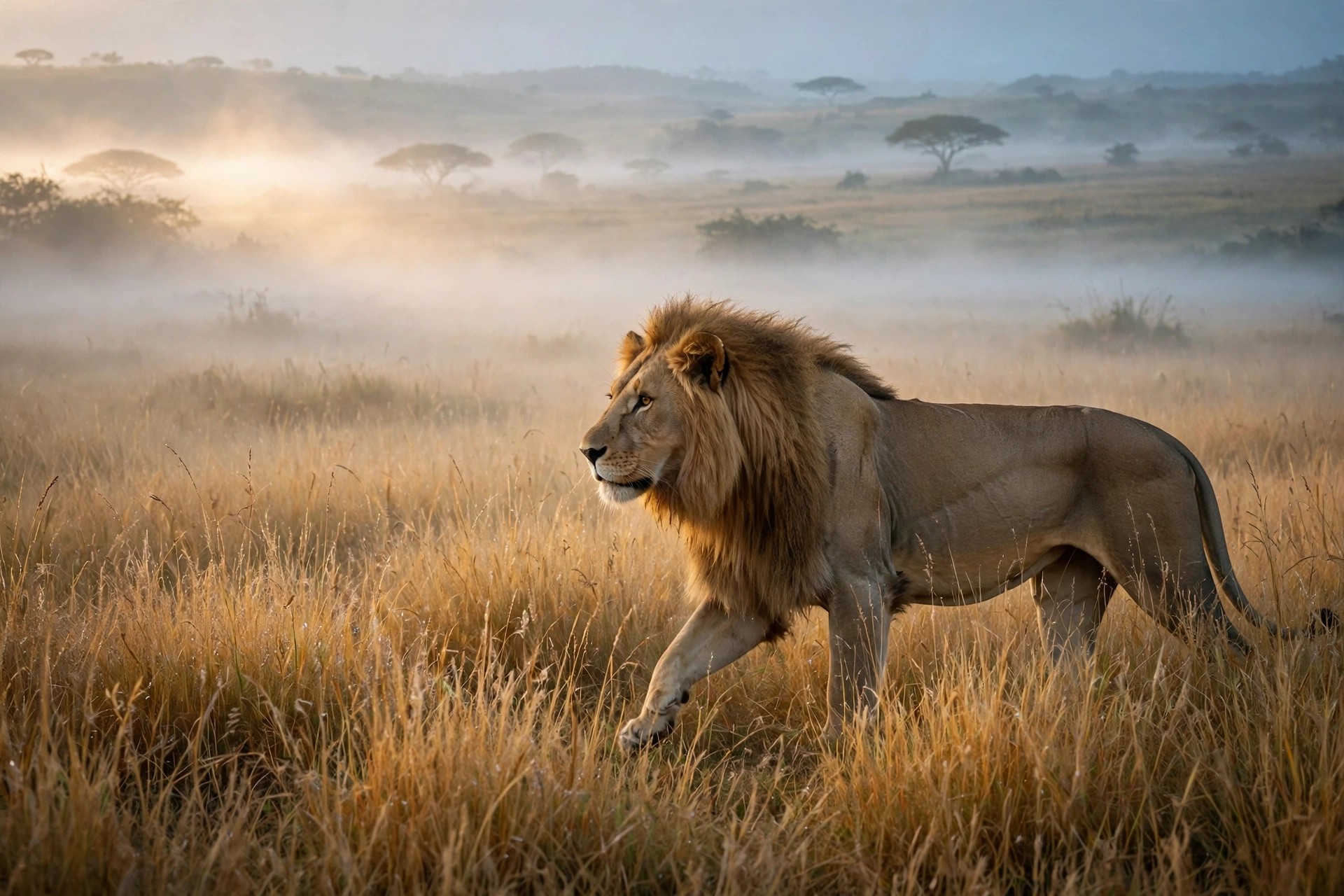
Being chased by a lion is one of the most common versions of this dream, and also one of the most frightening. You are running, the lion is gaining on you, and you wake up before it catches you — or sometimes just as it does. In traditional interpretation, a chase dream is rarely about a real lion. It is about something in your waking life that you feel is pursuing you and that you have not yet turned to face.
Classical dream books traditionally link a chasing lion to a powerful opponent or a pressing problem: a difficult boss, a person in authority who feels threatening, a debt, a legal matter, or a decision you keep putting off. The lion is big and fast because the problem feels big and urgent. The fact that you are running rather than fighting often reflects how you feel about it — that it is stronger than you, or that you are not ready to deal with it yet.
There is a gentler reading too, and it is worth considering. Sometimes the lion chasing you is your own ambition or responsibility catching up with you. A promotion you are not sure you want, a family duty you have been avoiding, a truth about yourself you have been running from — all of these can wear a lion’s shape in a dream. If you escaped the lion in the dream, traditional interpreters often read that as a good sign: you will find a way through the difficulty. If the lion caught you, it may simply mean the matter can no longer be avoided, and that facing it directly will bring relief sooner than running will.
Ask yourself after such a dream: what have I been avoiding this week? The answer is often the real meaning of the chase.
Seeing a Lion Attacking You in a Dream
An attacking lion is a step beyond a chasing one. Here the conflict is no longer approaching — it has arrived. In the traditional reading, a lion attack in a dream points to a direct confrontation: someone in a position of power may be working against you, or a problem you hoped would go away has become impossible to ignore.
The details matter. If the lion attacked but you were not badly hurt, interpreters have traditionally taken that as a sign that the difficulty, while real, will pass without lasting damage. If you fought back in the dream, that is usually read as a positive sign of your own courage and resilience — you are not as helpless in the situation as you fear. If you were injured, the traditional reading is more cautious: it may suggest a loss, a setback, or a hurtful encounter, and it is a prompt to be careful in your dealings, especially with people who hold power over you.
It is also worth remembering that not every attack dream is about another person. Sometimes the lion is a part of yourself — your anger, your pride, or a habit that has grown too strong. A lion attacking you can be your own conscience telling you that something inside you needs taming. In that case, the dream is not a warning about someone else at all. It is an invitation to look inward, to be honest about what has been growing unchecked, and to take a small, practical step toward fixing it.
Seeing a Calm or Friendly Lion in a Dream
Not every lion dream is frightening. Some people dream of a lion sitting calmly nearby, walking beside them like a companion, or even allowing them to stroke its mane. These dreams feel completely different when you wake up — peaceful, strange, and oddly reassuring — and their traditional meaning is different too.
A calm lion is traditionally read as a symbol of strength under control: dignity, protection, and quiet authority. It may point to a powerful person in your life who is actually on your side — a father, a mentor, a protector — or it may reflect your own growing confidence. If you have recently handled a difficult situation well, stood up for yourself, or taken on a responsibility and managed it, a calm lion can be your mind’s way of showing you that strength.
A friendly lion is sometimes also read as a sign of success and honour. Classical dream books traditionally link the lion to kingship and high status, so a lion that behaves gently toward you has often been interpreted as a sign that authority or respect may come your way — perhaps recognition at work, respect in your family, or the resolution of a long-running dispute in your favour.
If the lion in your dream felt like a guardian rather than a threat, take the dream as encouragement. It may be telling you something simple and true: you are stronger than you think, and the power you have been afraid of may actually be there to protect you.
Seeing a Lion Inside Your House in a Dream
A lion inside your house is a particularly vivid dream, because the house in dream interpretation almost always represents your family, your private life, and your sense of safety. A wild animal inside that safe space is bound to feel unsettling, and the traditional reading reflects that.
Classically, a lion entering the house has been linked to a powerful person entering the family’s affairs — sometimes a figure of authority, sometimes a guest or relative whose presence changes the household’s balance, and sometimes an illness or difficulty affecting someone in the family. The tone of the dream matters enormously here. A lion that enters calmly and sits in the house is read very differently from one that rampages through the rooms.
If the lion was calm in your home, some interpreters read it as the arrival of honour or a respected person into the family — a good marriage proposal, a respected guest, or news that raises the family’s standing. If the lion was aggressive or frightening inside the house, the traditional reading is a warning to pay attention to the household: unresolved tension between family members, a health concern that deserves a check-up, or a financial pressure that needs an honest conversation.
Either way, the dream is best treated as a prompt to look after your home life. Check in on your family. Sort out the small argument before it becomes a big one. A dream like this is rarely a prediction of disaster; it is more often a reminder that the people under your roof deserve your attention.
Hearing a Lion Roar in a Dream
The roar is the lion’s signature, and hearing it in a dream — even without seeing the animal — carries its own traditional meaning. In classical interpretation, a loud voice or roar is often linked to news, an announcement, or the voice of authority. A lion’s roar may represent a warning that reaches you from a distance: news of a powerful person’s anger, a public dispute, or an event that will affect many people, not just you.
How you reacted to the roar in the dream is the key detail. If you heard the roar and felt afraid, the traditional reading is that you may soon hear news that worries you, and that you should prepare yourself calmly rather than panic. If you heard the roar and felt unafraid — or even impressed — it has often been read as a sign of your own voice gaining strength: that you will speak up about something important, or that your words will carry weight with the people who matter.
Some interpreters also connect the roar with the call to truth: a reminder to speak honestly, to stand by what is right, or to stop staying silent about something that needs saying. If there is something you have been meaning to say to someone — an apology, a boundary, a truth — a roaring lion in your dream may be your own courage clearing its throat.
Fighting or Killing a Lion in a Dream
To fight a lion in a dream is to face the thing you fear most, head-on, with no running away. It is a dramatic dream, and in traditional interpretation it is usually read as a good sign — even when the fight is hard. The lion here represents the obstacle, the enemy, or the fear itself, and the fight represents your willingness to meet it.
If you defeated or killed the lion in the dream, classical interpreters have traditionally read this as a sign of victory over a powerful opponent or a major difficulty: a dispute resolved in your favour, a rival overcome, a fear conquered, or a long illness or hardship coming to an end. It is also sometimes read as a sign of rising status — that you will overcome someone who seemed stronger than you, and that others will notice.
If you fought the lion but the fight was still going on when you woke up, the traditional reading is that the struggle in your waking life is not over yet, but that you have the strength to see it through. The dream is not telling you that you will lose; it is showing you that you are already fighting, and that fighting is itself the path to the other side.
There is one caution in the classical literature: killing a lion is also sometimes read as a warning against pride. Victory is a good sign, but the dream may also be reminding you to stay humble after the win, and not to become the very thing you defeated — harsh, dominating, or cruel to those weaker than you. Strength, in the Islamic view, is best shown through patience and justice, not through force.
Seeing a Lion Cub in a Dream
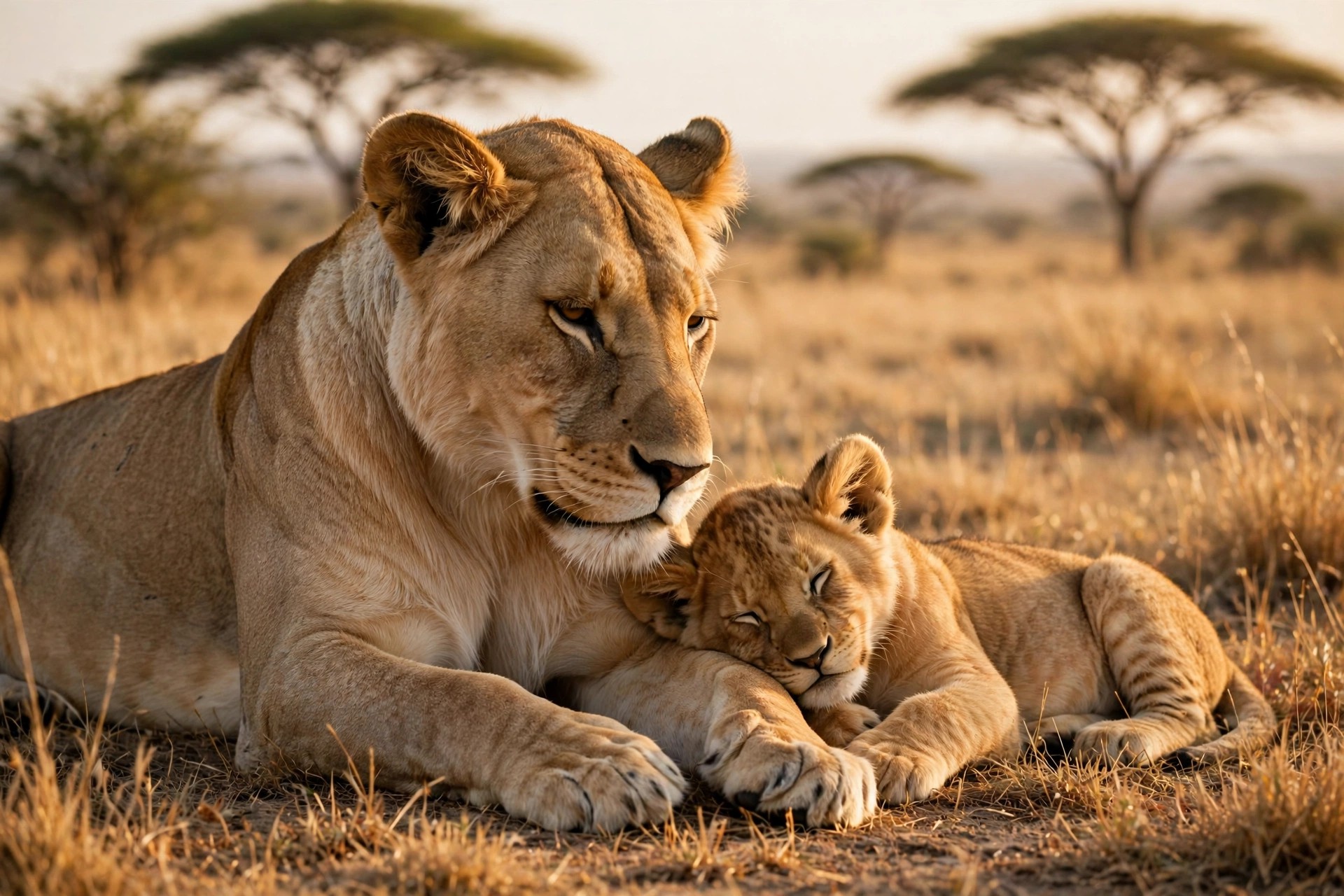
A lion cub changes the whole feeling of the dream. Suddenly the king of the jungle is small, playful, and vulnerable, and the dream becomes tender rather than frightening. In traditional interpretation, a cub usually points to beginnings: a child, a new project, a young person in your care, or a small matter that is still in its early stages.
If you are hoping for a child, or if there is a child in your family, a lion cub is often read as a sign connected with children — traditionally, a strong and healthy child, or a child who will grow up to be courageous and respected. If you were holding or playing with the cub, the reading is usually warm: affection, new responsibility, and joy.
There is also a practical warning tucked into this gentle dream. A cub grows into a lion. Classical interpreters sometimes read a cub as a small problem — a debt, a bad habit, a disagreement — that seems harmless now but will grow large if it is ignored. The dream may be inviting you to deal with something while it is still small and manageable, before it becomes the full-grown lion of a later dream.
Either way, a cub is rarely a bad omen. It is a dream about potential: something young, something growing, something that needs your care and attention.
Riding a Lion in a Dream
Riding a lion is one of the boldest lion dreams a person can have. You are not running from the lion or fighting it — you are on its back, in control, moving where you choose. In classical dream literature, riding an animal is traditionally a symbol of mastery and authority, and riding the king of the beasts is the strongest form of that symbol.
The traditional reading is a positive one: success over a powerful opponent, advancement in position, or a journey — literal or figurative — that ends well. Some classical interpreters read riding a lion as a sign of high rank or leadership, or of a difficult undertaking that will succeed because you have the strength and the support to carry it through.
If the ride felt smooth and controlled, the dream is often read as a sign that your affairs are under your control and that your plans will go well. If the ride felt wild or frightening, the reading is more mixed: you may be taking on something powerful and risky, and while the outcome can still be good, it will demand courage, patience, and care.
Either way, this is a dream of empowerment. The lion that once frightened you is now carrying you forward. It may be worth asking what has changed in your life recently that would make you feel that strong — and how you can keep that feeling going.
Seeing a Lion from a Distance in a Dream
Sometimes the lion never comes close at all. You see it far away — on a hill, across a field, behind a fence — and you watch it without fear. This is the quietest version of the lion dream, and its traditional meaning is correspondingly calm.
A lion seen from a distance is traditionally read as a sign of a challenge or a powerful person who is present in your life but not an immediate threat. The difficulty exists, but it is not at your door. Some interpreters read it as a sign of respect from afar, or of a good reputation reaching people you have never met. Others read it as a warning to stay alert without becoming anxious: keep an eye on the situation, but do not let it consume you.
If you felt peaceful watching the lion from far away, the dream is often taken as a good sign — strength observed from a safe distance, a problem that will resolve itself, or an opportunity that is still some way off but coming toward you. The distance in the dream is, in a sense, the point: not everything powerful in life is a threat, and not every problem needs to be fought today.
What Classical Islamic Dream Literature Says About the Lion
The lion holds a special place in the Islamic dream tradition. Classical dream books — the works associated with the tradition of Ibn Sirin and other early interpreters — traditionally link the lion to power, authority, and the figure of a ruler or a strong enemy. In that tradition, the lion is one of the great symbols: it can stand for a king, a tyrant, a brave man, a dangerous opponent, or a severe illness, depending on the context of the dream and the condition of the dreamer.
It is important to be honest about what these books do and do not say. They do not give a single fixed meaning for “lion”. Instead, they offer a way of reading: look at what the lion does, look at how the dreamer responds, and look at the dreamer’s own life. A lion that is gentle means something different from a lion that attacks, and the same dream can mean different things for a person facing a court case and a person starting a new business. That flexibility is not a weakness of the tradition — it is the point. Dreams are personal, and the classical scholars knew that.
The tradition also draws a clear line that modern readers should respect. In Islamic teaching, true dreams are understood to come from Allah, while frightening or confusing dreams may come from one’s own thoughts or from Shaytan. The Prophet Muhammad (peace be upon him) taught that a good dream is glad tidings from Allah, and that a bad dream should not be spread around or worried over — one should seek refuge in Allah from its evil and not let it disturb one’s life. That teaching is the most important context for any lion dream: take the good from it, do not let the frightening parts rule you, and do not treat a dream as a fixed verdict on your future.
No specific hadith or Quranic verse gives a fixed meaning for seeing a lion in a dream, and this article does not claim otherwise. What we have is the accumulated wisdom of the classical interpreters, who saw in the lion the image of power in all its forms — and who remind us that how we meet power, in dreams and in life, is what truly matters.
What to Do After Dreaming of a Lion
A powerful dream deserves a calm, practical response — not panic. Here is what the Islamic tradition and simple common sense suggest.
First, thank Allah if the dream felt good, and seek refuge if it frightened you. If the dream left you feeling strong, hopeful, or at peace, it is good to be grateful. If it frightened you, the traditional teaching is to seek refuge in Allah from the evil of the dream, to blow lightly to your left three times, and not to tell the dream to others in a way that spreads fear. The dream does not have power over you unless you give it power.
Second, pray and reflect. Two rak’ahs of voluntary prayer, a few minutes of quiet reflection, and an honest question — what in my life feels like that lion right now? — are worth more than hours of worry. Often the answer comes quickly once you ask the question calmly.
Third, give charity. In the Islamic tradition, charity is a protection and a means of warding off difficulty. Even a small amount, given sincerely, is a practical and positive response to a worrying dream. It turns fear into action, and action into something good.
Fourth, take one practical step. If the lion felt like a person, have the conversation you have been avoiding. If it felt like a debt or a problem, make the phone call or write the plan. If it felt like your own anger or a bad habit, take one small step to tame it. Dreams often point to something real; the best response is usually a small, real action.
Finally, do not let the dream run your life. A dream is a signpost, not a sentence. Do not make a major decision — leaving a job, ending a relationship, spending money you cannot afford — because of a single dream. Use it as a prompt to think and to pray, and then live your life with the good sense Allah has given you.
Frequently Asked Questions
Is seeing a lion in a dream good or bad in Islam?
It depends on the dream. A calm, friendly, or distant lion is traditionally read as a good sign — strength, protection, honour, or success. A lion chasing or attacking you is traditionally read as a warning about a difficulty or a powerful opponent. The feeling of the dream and the lion’s behaviour matter more than the animal alone, and no dream is a certain prediction of the future.
What does it mean to dream of a lion chasing you?
Traditionally, a lion chasing you points to a problem or a person you feel is pursuing you — a conflict, a debt, a decision you have been avoiding, or a powerful person who feels threatening. If you escaped in the dream, interpreters often read that as a sign you will find a way through. The dream is usually a prompt to stop running and face the matter calmly.
What does it mean if a lion attacks you in a dream?
An attacking lion traditionally suggests a direct confrontation or a difficulty that has arrived rather than approaching. If you fought back or were not badly hurt, the reading is usually more hopeful — the difficulty will pass, and you have the strength to handle it. It can also point inward, to anger or a habit that needs taming.
What does a friendly lion in a dream mean?
A calm or friendly lion is usually read as a positive sign: protection, quiet strength, a powerful person on your side, or your own growing confidence. Classical dream books traditionally link the lion to authority and honour, so a gentle lion has often been interpreted as respect or success coming your way.
What does a lion in your house mean in a dream?
In dream interpretation, the house represents family and private life. A lion in the house is traditionally linked to a powerful person entering the family’s affairs, or to a matter affecting the household — sometimes an honoured guest or good news, sometimes a warning to pay attention to family tension or a health concern. The lion’s behaviour in the dream is the key detail.
What does dreaming of a lion cub mean?
A lion cub usually points to beginnings — a child, a new project, or a small matter that is still early. It is often read warmly, as a sign connected with children or new responsibility. It can also be a gentle warning: a cub grows into a lion, so a small problem dealt with early is better than a large one dealt with late.
What does it mean to kill a lion in a dream?
Traditionally, defeating or killing a lion in a dream is read as a sign of victory over a powerful opponent or a major difficulty — a dispute resolved in your favour, a fear conquered, or a hardship coming to an end. The classical literature also adds a caution: stay humble after a victory, and do not become harsh toward those weaker than you.
Should I tell others about a frightening lion dream?
Islamic teaching advises against spreading a frightening dream around or worrying over it. The traditional guidance is to seek refuge in Allah from its evil, to pray, to give charity, and not to let it disturb your life. If you need advice, speak privately to a knowledgeable and trustworthy person rather than announcing the dream widely.
Can a lion dream be a warning from Allah?
In Islamic understanding, true dreams can be glad tidings from Allah, and a dream can certainly serve as a reminder or a prompt to reflect on your life. But a dream is not a fixed prediction, and it should not be treated as a certain message about the future. Take what is useful from it — the reflection, the caution, the encouragement — and leave the rest.
What should I do after seeing a lion in a dream?
Stay calm. If the dream was good, be grateful. If it frightened you, seek refuge in Allah, pray, and give charity. Reflect honestly on what in your life the lion might represent, take one small practical step if something needs doing, and do not let the dream dictate major decisions.
A Final Thought
A lion in a dream is a powerful image because power itself is a powerful thing in our lives — the power of other people over us, the power of our fears, and the power we carry inside ourselves. The traditional Islamic reading of this dream is not really about the animal at all. It is about how we meet power: whether we run from it, fight it, fear it, or learn to walk beside it with dignity.
If your lion was frightening, take it as a prompt to be brave in one small, real way this week. If your lion was calm, take it as a reminder that strength and gentleness can live in the same heart. And whatever your lion was doing, remember the oldest advice about dreams: take the good, leave the fear behind, and trust Allah with the rest. May your nights be peaceful, and may the strength you saw in your dream be the strength you find in your waking life.
